By Chris Banks
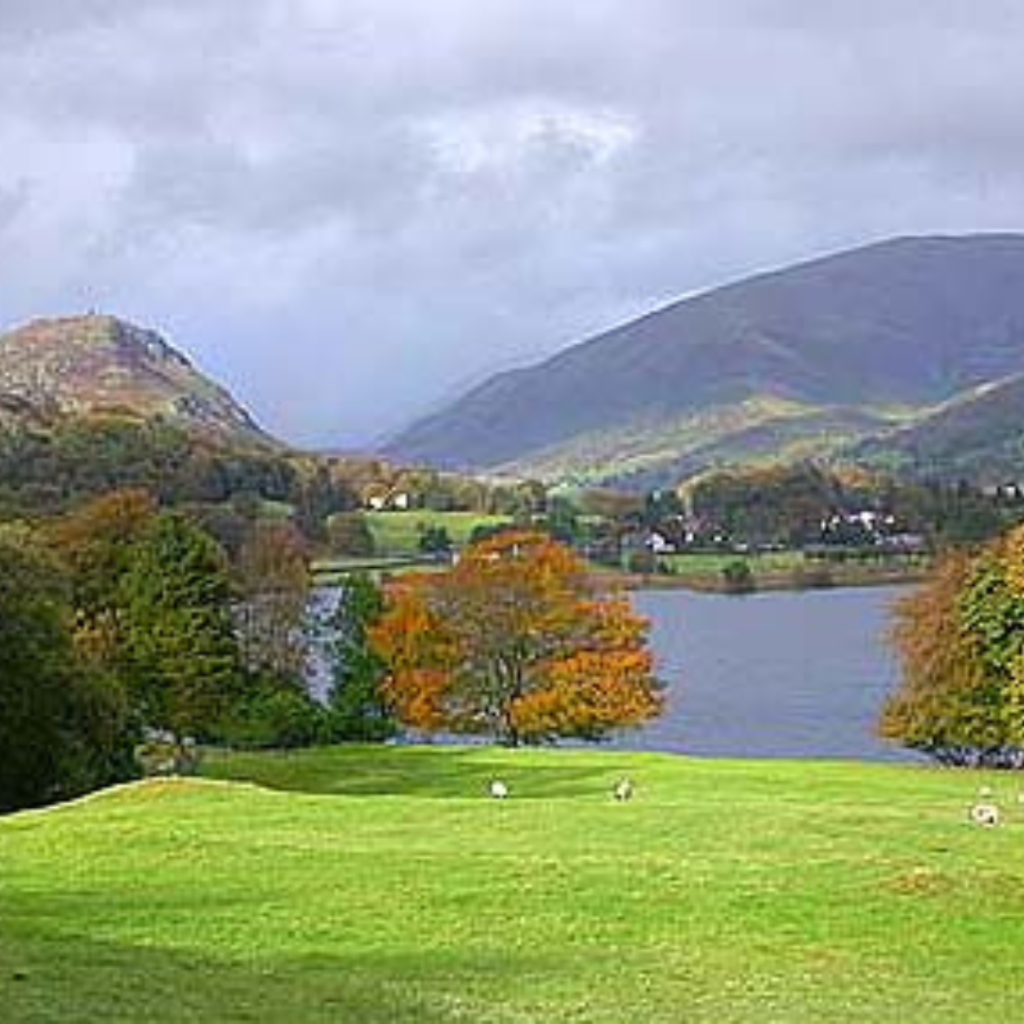
Why are friendships between poets so important? In 1795, Samuel Taylor Coleridge went on a walkabout across the English countryside, then met William Wordsworth and his sister Dorothy by chance in Dorset, and the rise of their literary friendship ignited both their creative lives.
These two poets began to spend countless hours together, talking, arguing, laughing, swapping lines and poems back and forth, and what soon became a near daily exchange for the next few years led to the most important poetry of their lives.
That Wordsworth eventually overtook Coleridge due to his blue collar, Protestant work ethic, and also because of Coleridge’s worsening addiction to opium is no matter. The friendship of these two men changed the course of English poetry forever.
When Philip Levine met a young eighteen year old Larry Levis, it was in his office at Fresno State College in California. They talked a little about Rimbaud, and Eliot, Frost, and Stevens, and then the freshman Levis asked to take Levine’s second year poetry class.
“At that moment I knew without the least doubt that the coming semester would be a triumph”, Levine wrote of his lifelong friend Larry Levis, a brilliant and inventive “one-of-a-kind” American poet, a teenager whom he had met at a small community college who would go on to become one of the leading “voices” of his generation of poets.
In his essay collection The Gazer Within, Levis talks about the importance of Philip Levine, as a poet and as a teacher who later became a friend to him, stating: “Whenever I try to imagine the life I might have had if I hadn’t met Levine, if he had never been my teacher, if we had not become friends and exchanged poems and hundreds of letters over the past twenty-five years, I can’t imagine it. That is, nothing at all appears when I try to do this. No other life of any kind appears” (29).
Their friendship, one based on trust, frank criticism and mutual admiration, fed each other’s poetry for thirty years until Larry Levis died suddenly of a heart attack at the age of forty nine in 1996. This chance meeting between a student and a professor made each other’s lives extraordinary. Not just American poetry.
When I first met Paul Vermeersch, it was sometime in 2000. I had recently sent out my poetry manuscript Going Out Like A Candle, which would morph four years later into my first book Bonfires, to three different small presses –Broken Jaw Press, Coteau Books, and Nightwood Editions. I picked these small presses because they were still publishing young new voices in Canadian poetry, and I felt they were my best chance to get a poetry book published.
Out of the three presses, I secretly hoped Nightwood Editions would choose my manuscript. I had fantasies of it being picked up off the slush-pile and immediately recognized for its artistic merits. After a few months, I heard from all three presses. Coteau Books politely declined, but suggested I might enrol in the Sage Hill Colloquium in Saskatchewan where I could get more expert advice on improving my manuscript. Solid advice. Next, Broken Jaw Press wrote me a hand-written note saying which poems they liked, but ultimately they passed too.
One day, I came home from work and listened to a phone message from Silas White at Nightwood Editions. Silas had read my poetry manuscript and invited me up to Toronto to talk about it. I was exhilarated. I did three victory laps around my kitchen. The next weekend I drove up to Toronto to a Nightwood launch at the Victory Café, and politely introduced myself after the reading to Silas who was grabbing a drink at the bar.
“Hey, I’m Chris…”
“Oh, hi!”, he said, “I’m glad you could make it! This is my friend Paul”
Silas then pointed to his friend sitting on a bar stool enjoying a pint of amber beer. I shook hands with Paul Vermeersch, and I had no idea how meeting both these men would impact my life for many years to come. Paul was smoking a cigarette and talking about the poetry of John Berryman to someone. He had already written a book entitled Burn, and he was three years younger than me! Paul was also working on a new poetry manuscript for the coming year, and there were even plans to put together a poetry anthology based on his I.V. Lounge Reading Series which he hosted.
Paul accepted me immediately as a fellow poet, and I could not believe my good fortunes. Both Silas White and Paul Vermeersch made my creative life possible that night.
After an hour of chatting, Silas sat me down and told me they were not going to publish my book. My ego immediately took the elevator to the basement level. However, Silas did say he found me a talented young poet, and he was willing to work with me until I was ready to publish a book.
Of all the conversations I have had about my poetry, this is the one that stands out most in my memories. When you are ready. I felt like I was given permission to forget all my annoying self-doubts, to slash-and-burn the little imagistic, mediocre poems I was still holding onto, and for the first time in my life write deeply, and remarkably.
A few years later, my first book of poems Bonfires was published to wide acclaim and my life changed again. Eventually, Silas moved back to the West Coast but we have stayed friends over the years, even after I moved my books to ECW Press in Toronto for a time, and I am deeply grateful for his “seeing” what I could not yet see in myself which was a way to add a page, or dare I say a small chapter, to the growing body of Canadian poetry.
Paul Vermeersch became a friend virtually overnight, and we were soon inseparable. I worked all week teaching high-school English, and on weekends I would drive an hour and a half to the small basement apartment where Paul was living in the Annex in Toronto, sometimes bringing my white English bulldog Baloo with me.
We would go out for dinner, talk about the poets we admire, shop bookstores, fantasise about the books we were going to write, then head off to meet Silas White and other friends like Carleton Wilson at the Victory Café for pints. Paul and I lifted each other up every chance we got.
Some nights we didn’t even talk about poetry. We might go to a movie, or stay in and play Playstation 2 which I would bring from my house in Waterloo, Ontario. Favourite games were War of the Monsters and a WCW wrestling game where you could make custom wrestlers fight each other. Naturally, we made wrestlers look like other Canadian poets. One notable match made Ken Backstock fight Dennis Lee. I forgot who won.
Paul Vermeersch can be a boisterous, fiercely intelligent, and indomitable force of nature. He can lecture on almost any topic, and did, which sometimes elicited eye-rolls from those sitting at the bar, but more often, induced smiles and cheers.
What I like about Paul is his energy, now and then, how he is able to release so much of it, as if time is of the essence, and there is no point in allowing yourself to take a back seat to life. Poetry is something he does well, and he makes you believe you can do this extraordinarily magical thing too. That is his gift as a friend and as an editor.
His I.V. Lounge Reading Series came to be something of an important hub for the literary community in Toronto. Paul gave elaborate, highly-animated introductions for his headliners, always to a packed house. I saw so many extraordinary writers and poets there in those early years. I always stood behind the DJ equipment and the turn-tables right at the back of the bar with my close friend Autumn Getty whom I usually picked up in Hamilton on my way into Toronto.
I remember the first time I read at the I.V. Lounge, I was so nervous I momentarily forgot the name of Sila White’s wife Amanda. Paul clapped me on the shoulder, smiled, and said “You’re on next!” It was perhaps my favourite reading of my own poems ever.
As I got to know Paul, more and more, I also saw the more vulnerable side of him. He had major depression struggles, as I would a few years later, and hustled to find gainful employment, outside of publishing circles, until he found a comfortable niche as a bookseller.
I remember he came as a guest speaker to my high-school classroom, but first he had to go across the road to “the smoke hole” in order to smoke a cigarette before class began. A number of seventeen year old students saw Paul smoking in his sport coat, and eventually curiosity won out, and they asked:
“Are you….a teacher?”
“No.”
Are you … .a Narc?”
“Nope.”
“Um, okay, then what are you?”
“I’m a poet!” stated Paul looking at the kids for the first time.
He then stubbed out his cigarette, and marched across the road, up the stairs to the third floor of my high school classroom, and gave a Master class on how to teach poetry to Grade 12 students.
Later, Paul had the opportunity to do an MFA in creative writing from Guelph-Humber University, and won the Governor General’s Academic Gold Medal for his poetry thesis. He then gutted it out as a sessional instructor at Sheridan College, teaching everything from Vampire fiction to rudimentary writing skills each semester, never really knowing if it was going to be his last teaching gig, until he was finally granted a tenured Professorship over ten years later.
Paul was the best man at my wedding, and the first person I called when my marriage had finally run its course. I was sitting in the Sunnybrook Health Sciences Centre about to get a concoction of enzymes injected into my right hand to help alleviate my Dupuytren’s contracture, an inherited condition where the cords in your hand pull your fingers down towards your palm.
“My marriage….it’s over. I don’t know what to do, Paul. I can’t go on…”
“You’re going to be okay, Man,” Paul tried to console me. “It’s okay. What is your favourite
colour? Start wearing that colour all the time”.
It’s funny the things you remember. What memory deems important. It leaves out the hundreds of emails, and direct messages, and phone calls where we traded poems back and forth, sometimes pumping the other up if that was what was required, and other times being direct and shrewd if a poem needed another three or four drafts. Paul has improved so many of my poems simply by attentively listening, and being present as both a friend and as an editor.
One night I read Paul a poem over the phone, one I had recently written and I was excited about. Paul’s response was one word. “Baaaam Mmmmm!!!!” Paul Vermeersch is a mensch.
In recent years, Paul and I see less of each other, but we still send each other poems. Both of us have quit drinking, and we look at those early years of our friendship with equal amounts of nostalgic bemusement and mature self-consciousness.
Other literary friendships, of course, have also been important to me. I keep long distance correspondences with the poets Chris Hutchinson and Bob Hicok. Autumn Getty and I toured our first books together, and I still cherish those long drives home from poetry readings in Toronto, arguing and laughing about the latest books we had just read.
Autumn still lives in Hamilton, and we are perhaps not as close as we once were, but those early car rides were seminal to my becoming the poet that I am.
I credit my friends Rob Taylor and Jim Johnstone for pulling me back into writing after a few “dry years”, Rob for soliciting poems from me for Prism International when I was in rehab for my alcoholism, and Jim Johnstone for publishing a small chapbook of new poems called Invaders from his Anstruther Press.
Both Rob and Jim are good listeners, poets, and editors in their own right.
Literary friendships between poets are important precisely because no one else understands what it takes to make a life as a poet, one fraught with disappointments and failures and little victories, except other poets.
The public at large looks at poetry with complete indifference, which is why the boring essay “Is Poetry Dead?” resurrects itself every five years.
It’s not dead. It’s just no one cares as passionately about poetry except other poets.
I think of when Phil met Larry, or when Coleridge met Wordworth, or even when I met Paul Vermeersch, and I finally understand it is not ‘a golden pen’ we pass back and forth between each other, but the ability to become more—more than the meagreness and mediocrity of so much small minded poetry nonsense, more because of the belief and encouragement of another brilliant poet who puts faith in us.
Paul and I are certainly not the only strong friendship in Canadian poetry. I’m thinking of other notable poetry friendships such as Ken Babstock and David O’Meara, Jim Johnstone and Shane Neilson, Carmine Starnino and Michael Harris, and these are just the ones I know of!
However, my friendship with Paul has sustained me through the vacillating spotlight of critical acclaim, and the dark calendar days of divorce, alcoholism and major depression.
I think back to how important that first meeting with Paul Vermeersch was to my life as a poet all those years ago, and it feels incalculable. Paul’s friendship opened a doorway leading me to a life full of art and poetry and creative possibilities, and for my part, I simply held my breath, and stepped through it.
 The Woodlot