by Chris Banks

“I suppose this book is, in a way, one that touches on the passion and traumas of queer relationships” writes poet novelist Zoe Whittall in the opening poem “Ars Poetica / Poem In The Form Of A Note Before Reading” in her brand new “poetry-memoir” hybrid No Credit River out with Book*Hug press, and it does these things for sure, for it holds up a microscope to femme and trans masc relationships, bisexuality, miscarriage, but it is also about the loneliness of being left with oneself after a great love fades from one’s life.
The book covers a personal relationship between 2014-2019, and the aftershocks of its eventual breakdown in the pandemic years that followed. No Credit River calls these prose poems “poems” and they really are, but not in the way many see or read poems. Now, I don’t want to get bogged down in an argument about prose poems, but as I was reading this book, I did think about what the American poet Mark Strand had to say about his own prose poetry in Guernica Magazine:
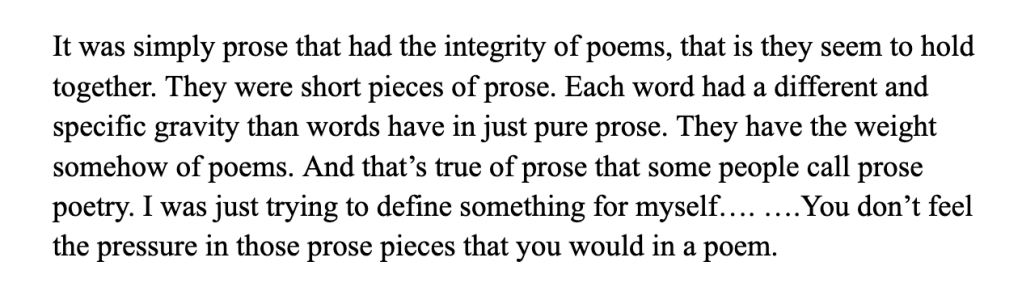
So what does this quote have to do with No Credit River? I think what Whittall’s poems sacrifice in lineation, or traditional poetic structures, they more than make up for by tapping into Whittall’s powerhouse gifts as a novelist: masterful syntax, stream of consciousness, and the uncanny descriptive details of a deeply personal life seesawing between love and losses.
Zoe Whittall talks about the collection’s “autofictional” qualities in the opening poem where she writes: “Autofiction permits stories without villains. There is only a made-up recipe, mostly style and feelings. This is a book of ideas, I imagine saying, ideas about attachment or devotion or loss or being pathetic.”
Well, maybe the recipe is made up, but as I read poem after poem, I thought, oh, what style, what feelings!
Even though Whittall writes in “A Shot at the Night”, “The best comedy is someone telling you secrets. Most poets think that’s the worst kind of poetry” (which certainly sounds like what some poets think); however, Whittall’s poems in No Credit River work precisely because they have both the heft of poetry and the world-building reach of prose. Here is a section of the same poem:
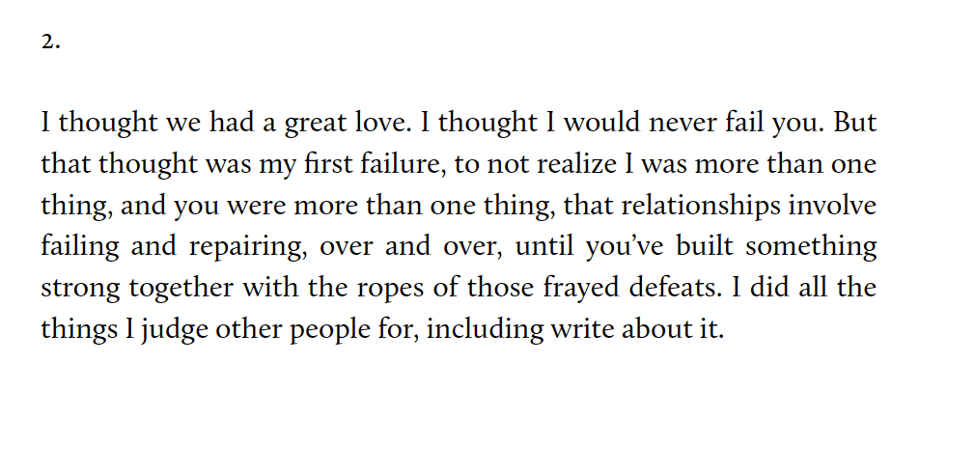
After reading this, I knew this collection was going to be special. Not simply because of the clear-cut honesty and emotional weight of poems like this one, but also because of the smooth controlled cadences of each phrase, as if every word was inevitable. As you read this book, so many perfect moments or small wisdoms stood out to me like here in “I’d like a Double Espresso and The National On Repeat”:
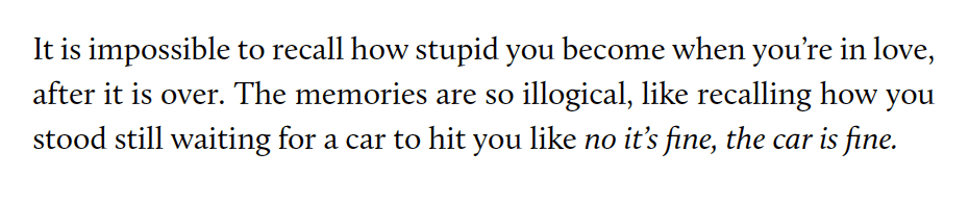
I was charmed, and connected with such deeply felt moments, hard gained wisdoms, which are everywhere in No Credit River, and any poet, or writer for that matter, who has given their pound of flesh over years and decades to stake out a writing life can empathize with the ending of “Prince Edward County” where Whittall writes, “But the book isn’t finished really, none of them are.”
So far I have only talked about snippets of the poems themselves as many of the poems are long and stretch over several pages, but here is the poem “October” which is one of the shorter pieces in its entirety:
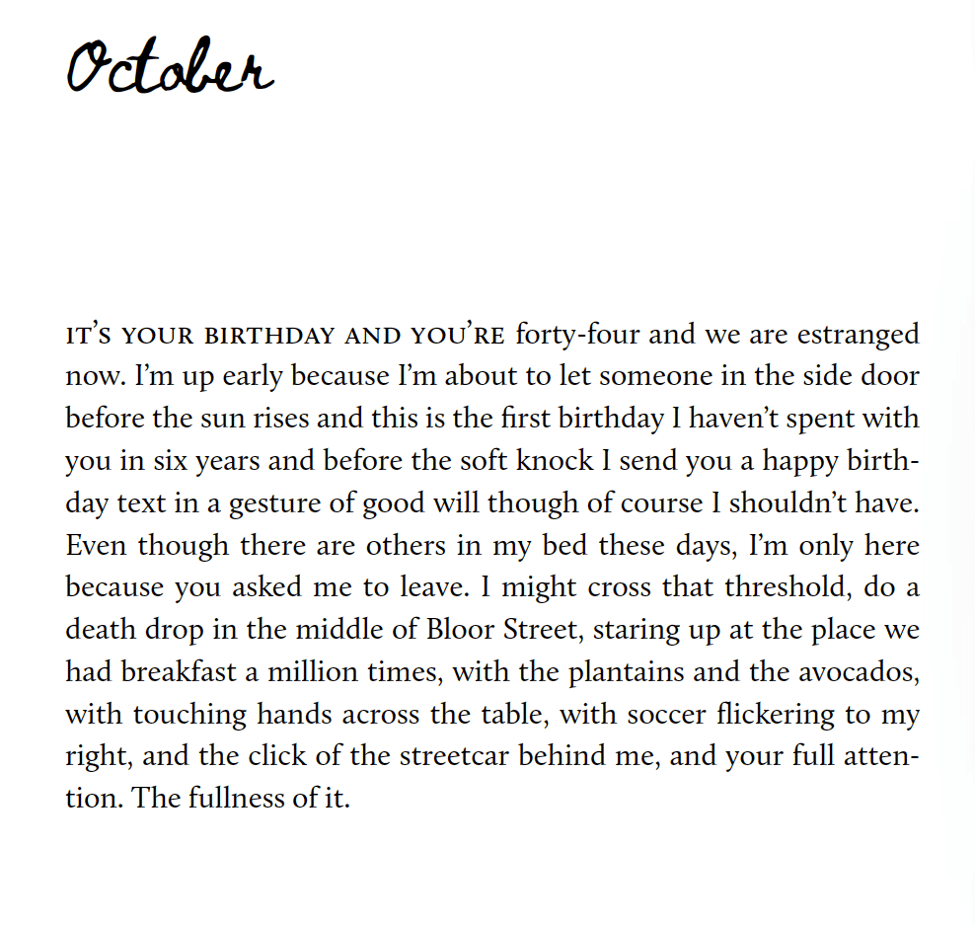
This is such a great poem, not simply because of its ‘compactness’, its economy of language, its conjuring of Bloor Street with its plantains and avocados and streetcars, but also its ability to manifest the ghosts of “a million breakfasts” and the “fullness” of a love that is no more. I am so envious of Whittall’s command of style and emotions; human feelings which are by no means pathetic. This book is full of truths and loss, pain and isolation, and the reader feels all of it.
I think No Credit River by Zoe Whittall, deserves all the credit for not just encapsulating the complexities of queer relationships, bisexuality, middle age, or for writing a successful “poetry-prose memoir” hybrid, but for making heartbreak real and anxieties that often get hushed apparent: things that make human beings human, and sad, and vulnerable in tender, moving poems that demand rereading.
Chris Banks is an award-winning, Pushcart-nominated Canadian poet and author of seven collections of poems, most recently Alternator with Nightwood Editions (Fall 2023). His first full-length collection, Bonfires, was awarded the Jack Chalmers Award for poetry by the Canadian Authors’ Association in 2004. Bonfires was also a finalist for the Gerald Lampert Award for best first book of poetry in Canada. His poetry has appeared in The New Quarterly, Arc Magazine, The Antigonish Review, Event, The Malahat Review, The Walrus, American Poetry Journal, The Glacier, Best American Poetry (blog), Prism International, among other publications. Chris was an associate editor with The New Quarterly, and is Editor in Chief of The Woodlot – A Canadian Poetry Reviews & Essays website. He lives with dual disorders–chronic major depression and generalized anxiety disorder– and writes in Kitchener, Ontario.
 The Woodlot