A street-cleaning machine whooshes by on one side of the street, scrubbing the asphalt pre-snowfall. Sometimes the birds are a thick chorus; then it’s silent as if they’d absconded by mutual decree (I guess they did!). Wasn’t Edith Piaf, French chaunteuse called Little Sparrow? When I was a child I spent a long time just sitting and staring at album covers. Piaf’s showed her small and fierce in a spotlight’s swollen moon. At six, she epitomized music to me, as if her body in its mid-century robe was a note, a living note, not only the sounds that rose from her like another era’s smoke but her very flesh. This was the intensity I quested for. Piaf on the Rue Pigalle, searing through her poverty with song. There is no program for poetry and its teachers are mysterious, frequently inhuman. If you engage in the multiplicities of your own unique life, there’s no way you will write like anyone else (has anyone combined say a love of Edna St Vincent Millay with Mallarme with Li Bai like this imagined you for instance?). You are the combination of everything you have let enter you in art and beyond that, all the rest of life’s muck and deliciousness.
*
Poetry: how can we be so culturally obsessed with writing and publishing it, with absorbing it into a “gold star” culture, with twisting it into professions, without also aching to sustain poetry as an art form through reviews, book buying, hosting events that enlarge the genre with the inclusion of other mediums and otherwise nourishing its un-tameable state? After all this time, this is still a paradox I can’t fathom (is it ego? is it fear? is it organization? is it our individualistic society?). Most musicians I know not only play, but go to concerts, listen to a wide range of artists (easier to do today for no cost of course!), buy vinyls or downloads and are constantly learning their craft. Poets, though we still create likely the most marginalized art form (well maybe performance art is more liminal?), hope more intently and possibly damagingly for the big press, the grand prize. The great majority of musicians self-record and consider it a minor victory to play regular shows in local bars (exceptions, always!). My interest and concern is where the energy lies. Where the intensity lives. Where is the impetus in the world of poetry to make poems and what’s sapping or diverting that zing, that pow?
*
I was often found behind a stack of books as a child. Or on the other side of any facsimile of a text: cereal box, album opened to the lyrics, any package or sign with language on it. The first subject of my poems was nature, then love and lust, then death (or were these spurs reversed?) An oak tree; John Lennon’s shooting; Patrick’s shoe like a Grade 8 missile of toxic attention and stirrings. That order perhaps, then all commingled: a sensual, elegiac flower child writing her world, its seepages (I’m typing this from a hand-written page on an October-hot Saturday while out on my porch swing beneath the lilac and apple trees in their inevitable autumnal states). Before 16, there was only the poem, story, lyric. By 21, a notion of audience as an approval machine, the ache to place a tangible text in their weird hands. Once 30 arrived, I recognized ambition, drive, the must do’s that usually eluded me, there and there a faint check mark amid swerves into oops. What they never tell you is how, far too often (or necessarily so?) you will wrangle with silence, invisibility and that there is no trajectory of yes yes yes. Most vanish; some soar then flat-line. Even a heralded Canadian poet like Al Purdy was only making $250 per reading at the end of his illustrious literary life (and he died over 20 years ago. The figure remains the same today!). What if gold stars are not your destiny? Are you still willing to assert a position behind a tower of what’s already been written, sliding, from time to time, your own frail or fighting markings on top?
*
If you have to be sure, don’t write. Or so said John Berryman to WS Merwin as the latter recounted in one of his poems in that scar-carving testimonial of a book The Lice. This reality is both the kick in the patootie and the silencer for so many makers. Being certain would be boring. You would know how to finish the poem! You would know it would win the Nitwit Award and go on to be included in the Future Nobodies anthology that all first-year English majors would be forced to read. No. Dull. A snooze. You not only will not know how the poem will end but mostly, even within momentary accolades, if any, whether what you wrote really spoke at all, or will last, have an impact, make your sacrifices worthwhile, turn you canonical, desired. This ability to exist in a room whose walls regularly fall away, with a door that could also be a jar in Tennessee with an icebox plum for a doorknob upon which a buzzing fly has settled, is the prerequisite, the condition. It is neither noble nor sordid. It just is. Does one ever choose this state or is it always given and then you live within its mysteries however long you can.
*
So it turns out I slept. A full ten hours. My middle-aging body isn’t screaming for once in any of its over-strained places (no regrets for the high kicks, the sidewalk stomps! no sorrow over all those hair whirls!). Stevens’ “the nothing that is not there and the nothing that is” is what my life seems somedays, its flesh beset by acid reflux, the ghosts of toxic sex, vague muscle aches, minor pains that remain nameless but that combine into a state that is less interested in living than it used to be. Nature and books have always been my solace. Little else has been, in a sense, real. The cedar trees of my childhood, my sunflower garden now, the mad array of cats and stacks and shelves of possible worlds to inhabit. That’s all. The lesson is that if you are the same kind of solitary person then these will be your consolations and you must guard their spaces with as much ferocity as you can muster. Every day. Words and sounds flow (flower!) from nature and books and with these you make more complex balms. Today, I’m perusing Ashbery as I do each morning (a strange kind of bible?), returning to the trance-like Schnackenberg, dipping within Hoagland amid Christakos and Wharton for reviews, and the poplars are rocking softly in the wind beyond my eternal studio window.
*
Anne Waldman, wild San Francisco poet of the 70s, wrote: “if you’ve been resolute long enough, there’s no way back.” Correct, I think. Despite the fact, as one ages in the literary world, sensations of redundancy shudder, a falling over the box’s edges you never wanted to fill anyway. Check Check Check. Why do we allow our art, the dang core of our lives, to be shrunk down so? To the parameters of gilded stamps of approval, the borders of academic programs, the fixations on the supposedly endlessly new, interminably young so that those who are renegade, dedicated, often beyond juried acceptability are relegated to dismissal? Canceled for not being the latest bauble on the shelf when is not poetry an ancient craft (Dean Young doesn’t approve of the word craft and sees it as a further leashing of artistic recklessness but I don’t. It’s more organic to me, a honing of song) that takes a lifetime to glimmer towards?
When I was just beginning to emerge (all those strangely suffocating yet illuminating Burnaby Writers’ meetings!), I yearned towards older poets to learn from their enduring travails and instants of triumph. Is this happening today amid the utter emphasis on getting an MFA, winning prizes, and that first book/best book construct? Or does every generation feel this way? I guess I take solace in the fact that even in 1933, Emily Carr was bemoaning: “Nobody is interested in anything these days except their own doings and thoughts…Everybody does everything…Nobody wants to climb the stairs step by step.” Mentorship, apprenticeship, the ship of sailing a wide array of seas. Let’s keep taking those voyages instead shall we?
*
Maybe I’ll do a Pound now and set down a few dicta, a practice which appears to be the obverse of the reckless, but first, I’m not reckless, not really (shhhhh Mr Young!). I simply relish the values of multiplicity, variety, the freedom of finding other ways to be in the world than the sanctioned. At any rate:
1. There is no singular pathway to poetry and it is best for the art that there is no one dominant direction (have I said that already? likely. by this point I feel I’ve told you everything and nothing at once.) Begin in a field and continue in the sky or start empyrean and then cascade to loam. And back.
2. Poetry is an imaginarium of musics. You need an ear and its persistences. We truly don’t need more empty clunk in the world (flat verbs, sleepy clichés, poems that sound as if they were just speaking casually about little – unless that is their aim – and even still, zzzzz.)
3. There is no final message. The poem has content usually and even a wild thesis interpretable through imagery but if you are asking what the message is (what the poet is TRYING to say) and not swaying with sound, soaring within form then the door you are knocking on is not the poem’s.
4. Poetry doesn’t care about degrees, career paths, prizes, social media likes and such. That’s a set of human constructions designed to allow us to eat or strut. The poem, meanwhile, hums into its own darknesses and maybe gets a tiny kick, if any, out of being randomly discovered by a small child or the dying. The times’ need enters to beg for magic.
5. There must be energy inside the language (I’m big on energy. Why I prefer writing exercises to be dubbed “spurs” not “prompts,” a word that sounds all pursy-lipped and judgy!). Verbs contain this bam. Hearing when to bust the line. A honing from excess to sparse, fierce, even within a torrent. Shape form. Query its explorations, perfections. Muck about. Roll the poem over the body more than once. Poetry is a cold violence (no fire can now warm me, said Dickinson, her test for a poem’s necessity) and a hot eroticism and where both these sensations meet on the tongue.
6. Poetry is either a sickness, some terminal condition of the nervous system you spend your whole life negotiating with in order to function (sure feels like that some days, especially the older one gets!) or it is a spiritual obsession, a dedication to the mystery, a devotion to the unknown. It doesn’t have to be either of course. It can be both. But either or and everything, poetry is not a casual profession. It’s more like an irrevocable vocation in fact. Read like a beast; live like a witness. Poetry will always ask more than you think you can give and in this the yearning longs towards the singing.
Did I say something? The magpie twiddles its notes from the crabapple tree. So much red fruit, tiny, unpicked, fated to fall uneaten, but still wholly beautiful in the early October sun.
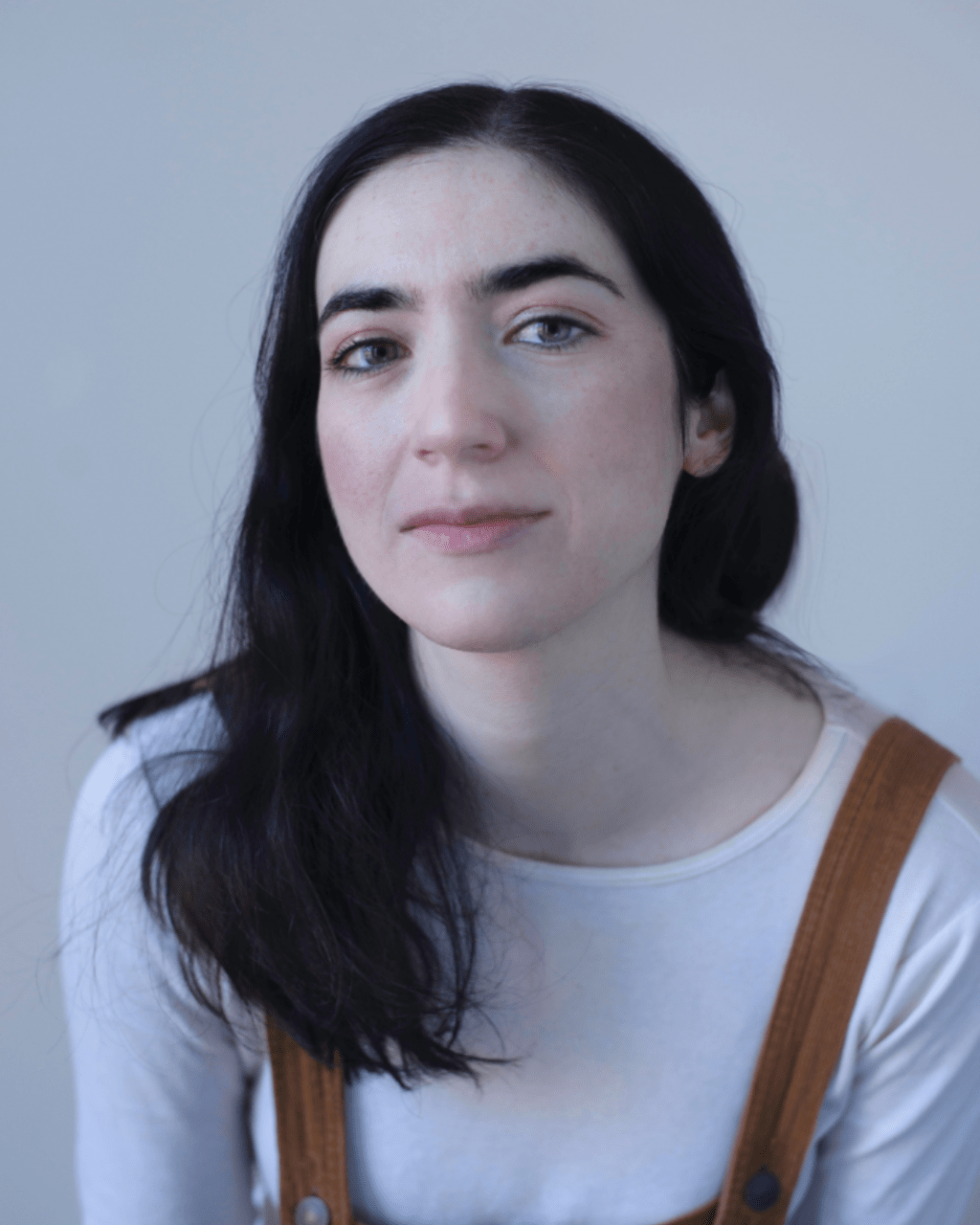
Catherine Owen is the author /editor of seventeen collections of poetry and prose including Locations of Grief, 24 Canadian writers on Place and Mourning (W & W, 2020) and Moving to Delilah, poems (Freehand Books, 2024). She’s written book reviews for 13 years, ran or co-run performance series for over 20 and recently hosted a 2.5 year poetry podcast, Ms Lyric’s Poetry Outlaws. A born and raised Vancouverite, she now lives in Edmonton where she instructs communications at a tech college, writes, collaborates with artists, and gardens when the weather says yes!
 The Woodlot