

O Esperanza!
by Catherine Barnett

Turns out my inner clown is full of hope.
She wants a gavel.
She wants to stencil her name on a wooden gavel:
Esperanza's Gavel.
Clowns are clichés and they aren't afraid of clichés.
Mine just sleeps when she's tired.
But she can't shake the hopes.
She's got a bad case of it, something congenital perhaps.
Maybe it was sexually transmitted,
something to do with oxytocin or contractions or nipple stimulation,
maybe that's it, a little goes a long way.
Hope is also the name of a bakery in Queens.
And there's a lake in Ohio called Hope Lake where you can get nachos.
I'm so stuffed with it the comedians in the Cellar never call on me,
even when I'm sitting right there in the front row with a dumb look of hope on my face.
Look at these books: hope.
Look at this face: hope.
When I was young I studied with Richard Rorty, that was lucky,
I stared out the window and couldn't understand a word he said,
he drew a long flat line after the C he gave me,
the class was called metaphysics and epistemology,
that's eleven syllables, that's
hope hope hope hope hope hope hope hope hope hope hope.
Just before he died, Rorty said his sense of the holy was bound up with the hope
that some day our remote descendants will live in a global civilization
in which love is pretty much the only law.


-from Human Hours (Graywolf Press, 2018)
The day after the U.S. presidential election, I visited a Grade 12 high school class as a Visiting Poet with Poetry in Voice. The mood in the room wasn’t exactly somber, but there was a palpable tension in the air. After we read Franny Choi’s “The World Keeps Ending, and the World Goes On,” I noticed one student squirming slightly in his seat while discussing the poem with his partner. When I asked him how he felt about the poem, he admitted to me, hesitating, “I think I prefer hopeful poems.”
While this led me to making the case that in fact Choi’s post-apocalyptic poem is in fact deeply imbued with hope and the possibility for change (otherwise, why write it all?), something about my answer felt dishonest to me. I think I prefer hopeful poems too, but I’m not convinced I should. I’m not convinced we shouldn’t complain or wallow, indict or lament. I think poetry is capacious and there is room for multiple expressions. Nor am I convinced any of these gestures in a poem run contrary to hope or optimism more broadly. Still, I keep coming back to the most shamelessly hopeful poem I know, “O Esperanza!” by Catherine Barnett, from her 2018 collection, Human Hours (Graywolf Press, 2018), one of my favourite books of poetry published in the last decade.
Catherine Barnett is the author of three other poetry collections, Into Perfect Spheres Such Holes Are Pierced (Alice James Books, 2004), The Game of Boxes (Graywolf Press, 2012), and most recently, Solutions for the Problem of Bodies in Space (Graywolf Press, 2024). A past Guggenheim fellow, winner of the Whiting Award and an Award in Literature from the American Academy of Arts and Letters, she teaches in the graduate and undergraduate writing programs at New York University. Though Barnett has not yet achieved household-name status in Canada, her work stands alongside other American poets such as Mary Ruefle, Dean Young, James Tate, Virginia Konchan, Camille Guthrie, and Charles Simic known for their absurdist (often self-deprecating) humour, wild associative leaps, and occasional forays into the surreal. However, it would be a mistake to characterize their work as silly or unserious (if such a thing were meant in a derogatory way, which frankly would be weird, in my opinion). On the contrary, these poets offer nuanced meditations on the baffling, contradictory nature of being alive, equal parts exhilarating and excruciating.
Humour is not merely an aesthetic, but a lens, an ethics, a praxis, and ultimately means of survival. The title of the poem evokes the apostrophe, a poem of direct address to an inanimate object, abstract qualities, or a person not living or present. I wonder if there are echoes of Emily Dickinson here, not only in Barnett’s title but in the poem itself, which addresses the personification of hope (or “Esperanza” in Spanish). It’s hard not to see the poem in conversation with Dickinson’s “’Hope’ is the thing with feathers.” The apostrophe form is ideal for allowing a poem’s speaker to philosophize about the abstract, challenging William Carlos Williams’ enduring Modernist dictum, “no idea but in things.”
Writing into abstraction (as opposed to writing in abstraction, a subtle yet important difference) is an ambitious move on a contemporary poet’s part. In the hands of a lesser poet, a project like this could easily devolve into vague generalizations or platitudes, but Barnett is too deft a stylist for that. Instead, she maintains a tone of playful self-awareness that skewers our expectations of the philosophical poem. The exclamation point in the title also seems to be doing a lot of work here. On the one hand, it feels like a cheeky wink that signals an entry to a poem that doesn’t shy away from, indeed embraces hyperbole with childlike exuberance. On the other hand, the exclamation point recalls Dickinson and Whitman, both of whom make extensive use of this punctuation mark, albeit in vastly different ways: Dickinson’s truncated yet potent syntax; Whitman’s relentless, breathless prose-like proclamations. More importantly, they occupy opposing ends of the compression/expansion spectrum, both of which, as we’ll see, Barnett makes liberal use of in the poem.
“Turns out my inner clown is full of hope,” the poem opens, with a match-like flare. There’s a frisson of surprise that comes with this realization, which gives us the feeling of witnessing the speaker’s mind in action as it unspools on the page. This seems consistent with Barnett’s interest in “the pleasure in trying to ask, as you might in improv, ‘If this unusual thing is true, then what else could be true?’” (BOMB Magazine). There’s a distinct improvisational quality here, as Barnett hits us with a series of bold, declarative statements, which seem to build one atop the other, in a “yes-and” fashion:
          She says she wants a gavel.
          She wants to stencil her name on a wooden gavel:
          Esperanza’s Gavel.
          Clowns are clichés and they aren’t afraid of clichés.
          Mine just sleeps when she’s tired.
The speaker’s inner clown assumes the farcical role of gavel-wielding judge, recalling the bouffon clowning tradition. As Jacques Lecoq writes: “While we make fun of the clown, the clown makes fun of us…bouffons amuse themselves by reproducing the life of man in their own way” (118). This seems to be an apt description of the inner clown figure, who is clearly not “a face-painted balloon-botherer but…disrupter and endurer” (Ryan). Barnett’s radically short, end-stopped lines create a staccato-like rhythm, temporarily broken by the colon at the end of the line, “She wants to stencil her name on a wooden gavel.”
This disruption of the established rhythm sets the stage for another surprising claim: “Clowns are clichés and they aren’t afraid of clichés.” Barnett holds up a mirror to us as readers and writers who have been taught to avoid cliché at all cost. In doing so, she invites us consider our own relationship to clichés, and models subverting them through laughter, perhaps the most effective form of resistance. The speaker continues her speculative inquiry into the nature of her inner clown persona by giving us longer parsed lines:
          But she can't shake the hopes.
          She's got a bad case of it, something congenital perhaps.
          Maybe it was sexually transmitted,
          something to do with oxytocin or contractions or nipple stimulation,
          maybe that’s it, a little goes a long way.
The idea of “the hopes” as a sexually transmitted disease, and further expanded as “something to do with oxytocin or contractions or nipple stimulation” takes the poem into bawdy terrain but pre-empts eroticism with comically formal, medicalized sexual language. The shift in line-ending patterns feels significant here too: as James Longenbach writes in “The Art of the Poetic Line,” “The drama of lineation lies in the simultaneous making and breaking of our expectation for patterns” (70). For me, this drama culminates in the swerve from 3rd person POV (describing the speaker’s inner clown) to 1st person, with the image of the speaker as a wide-eyed, hopeful-faced audience member at the Comedy Cellar nightclub in New York. The speaker then adopts the imperative voice, grabbing the reader by their proverbial collar:
          Look at these books: hope.
          Look at this face: hope.
The insistent tone of these lines seem to imagine a reader who needs convincing of the speaker’s hopefulness, which might otherwise not be apparent. The subsequent lines gain speed and momentum, eschewing full stops in favour of commas as the speaker/poet recounts the class that she was lucky to take with the philosopher Richard Rorty (1931-2007), though she admittedly “stared out the window and couldn’t understand a word he said,” further undercutting the authority of the lyric “I.” Towards the end of the poem, the speaker’s repetition of the word “hope” eleven times (the number of syllables, she notes, in the class’s name, “metaphysics and epistemology”) renders the word almost meaningless—as abstractions tend to become, particularly when attempting to describe the metaphysical. This repetition puts additional pressure on anaphora as the primary sound device driving this relatively plainspoken poem.
“O Esperanza!” ends on a note that verges on the earnest, even tender:
          Just before he died, Rorty said his sense of the holy was bound up with the hope
          that some day our remote descendants will live in a global civilization
          in which love is pretty much the only law.
There’s something moving about this ending for me. Maybe it’s the timing of Rorty’s epiphany before his death that gives it weight and meaning. Maybe it’s the way the poet surprises us by enjambing these lines, ending on “hope,” but unlike the previous lines ending with the same word (creating a ghazal-like, incantatory effect), the syntax continues. Maybe it’s the gesture of reaching out towards the future, as Whitman famously does in “Crossing Brooklyn Ferry”: “I am with you, you men and women of a generation, or ever so many generations hence.”
At the same time, there’s a darker element present both in Whitman’s future-facing stance as well as in Rorty’s, that comes with the acknowledgement of one’s own mortality—a pervasive theme in Barnett’s work. The poem’s mixing of humour, sex and death embodies what Keats termed negative capability: one’s capacity for “being in uncertainties, mysteries, doubts, without any irritable reaching after fact and reason” (John Keats, the “Negative Capability” Letter). Ultimately, the philosopher gets the last word. The poem is thus bookended: we begin with a parody of the law, with a clown who wants a gavel, and end with a hopeful vision of the future in which “love is the only law”—a radical, capacious, daring optimism that perhaps we need now more than ever.
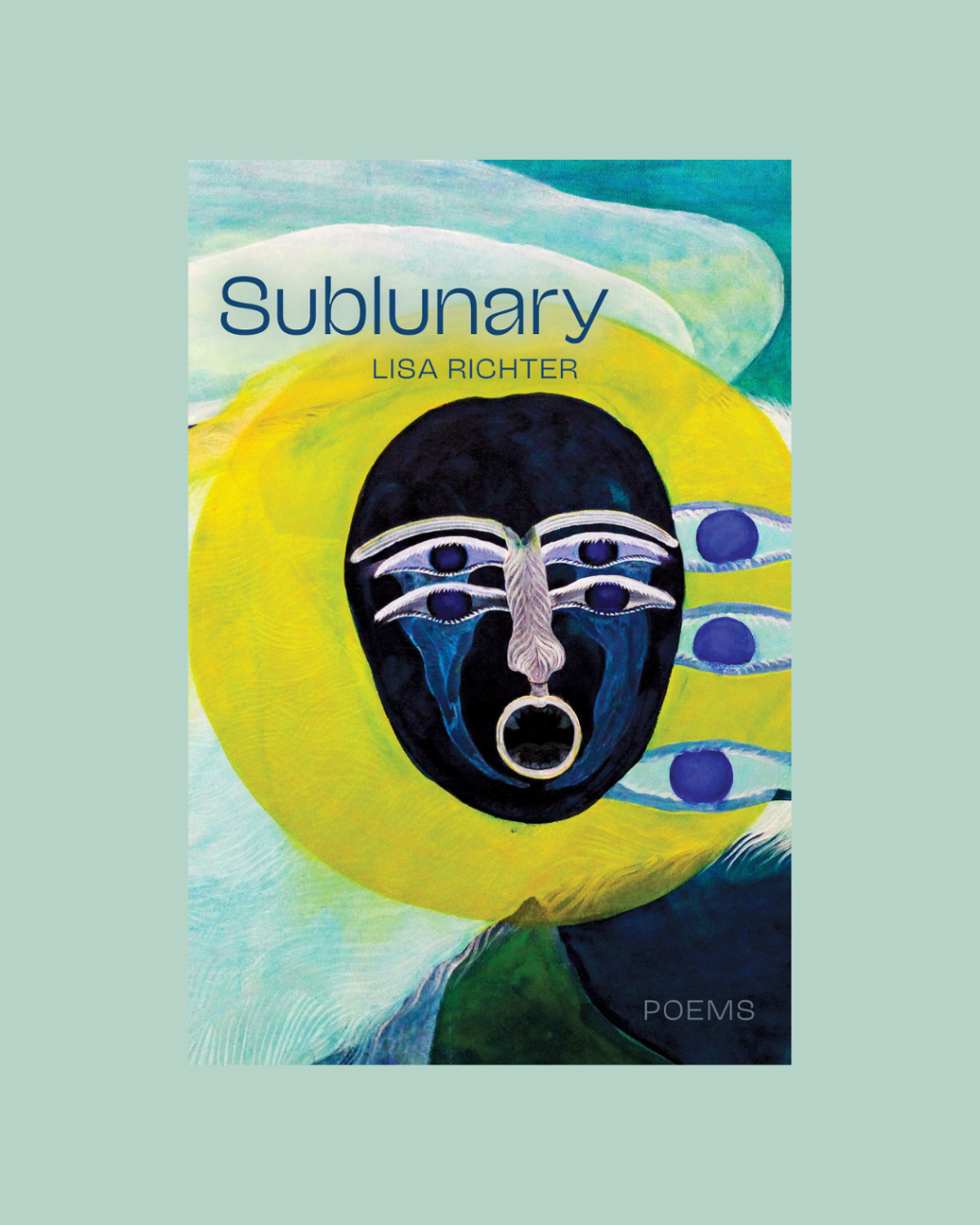
Lisa Richter is a Toronto-based poet, writer, and teacher. She is the author of two books of poetry, Closer to Where We Began (2017) and Nautilus and Bone (2020), winner of the National Jewish Book Award and the Canadian Jewish Literary Award for Poetry, among other honours. Her work has appeared in Best Canadian Poetry, The Fiddlehead, The Malahat Review, The New Quarterly, amongother places. She is currently pursuing her MFA at the University of Guelph, and teaches creative writing at University of Guelph-Humber. You can find her online at www.lisarichter.org or on Bluesky @lisarichter.bsky.social.
_____________________________________________________________________________
Works Cited
Academy of American Poets. “Apostrophe.” Poets.org, poets.org/glossary/apostrophe.
Barnett, Catherine. Human Hours. Graywolf Press, 2018.
Ryan, Declan. “A New York Minute.” The New York Review of Books, 30 June 2020, www.nybooks.com/articles/2019/10/10/catherine-barnett-hannah-sullivan-new-york-minute.
John Keats, the “Negative Capability” Letter. mason.gmu.edu/~rnanian/Keats-NegativeCapability.html.
Lecoq, Jacques. Theatre of Movement and Gesture. 1st ed., Routledge, 2006, https://doi.org/10.4324/9780203007464.
Longenbach, James. The Art of the Poetic Line. Graywolf Press, 2008.
Millner, Maggie. “Catherine Barnett by Maggie Millner.” BOMB Magazine, 27 Sept. 2018, bombmagazine.org/articles/2018/09/27/catherine-barnett/. Accessed 04 Nov. 2024.
Whitman, Walt. “Crossing Brooklyn Ferry.” The Poetry Foundation, 22 June 2024, http://www.poetryfoundation.org/poems/45470/crossing-brooklyn-ferry.

 The Woodlot