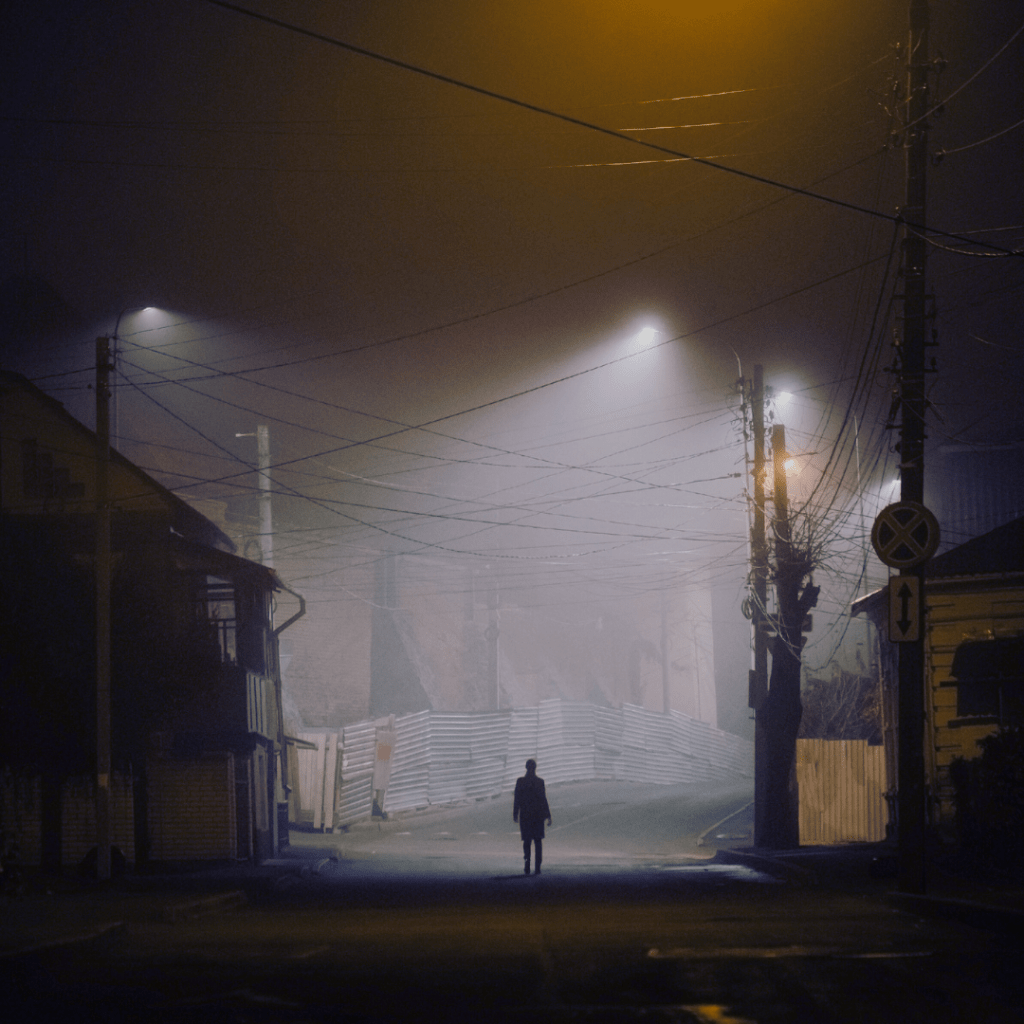
     I speak in a foreign language.
     You don't know what I say.

     -from John NewLove’s “Why Do You Hate Me”
I was rereading Matthew Zapruder’s fantastic book Why Poetry the other day and, in particular, his essay “ Nothing Is The Force That Renovates The World” where he talks about what great poetry does which is that it brings us to “the limits of knowledge, of language, of our own existence.” Zapruder goes on to say that poems we tend to return to, again and again, “retain a central unsayability, a place where the drama of truly looking for something essential that can never quite be reached is expressed” (198).
When I think about the poets who have meant the most to me over the years–in my Twenties it was Gwendolyn MacEwen and Patrick Lane who seemed to speak another language than me; in my Thirties it was Philip Levine and Larry Levis and Stanley Plumly and Mark Strand; and then later Bob Hicok and Dean Young– these poets all take different approaches to poetry, but they also all contain what Donald Hall once called an ‘unsayable room’ in their poems.
In the essay “The Unsayable Said,” Donald Hall writes, “The unsayable builds a secret room, in the best poems, which shows in the excess of feeling over paraphrase. This room is not a Hidden Meaning, to be paraphrased by the intellect; it conceals itself from reasonable explanation. The secret room is something to acknowledge, accept, and honor in a silence of assent; the secret room is where the unsayable gathers, and it is poetry’s uniqueness.”
I think this is what I was responding to in my Twenties when MacEwen wrote, “my friends, my sweet barbarians, / there is that hunger / which is not for food — / but an eye at the navel turns the appetite / round” or when Patrick Lane convinces us “the sound of winter is made of all / the things not there” or even John Newlove who admits “I speak in a foreign language. / You don’t know what I say.”
I admit to understanding these poems much better than my Twenty-two year old self did who might have thought these poems were cool, or was a little in awe of the inimitable range of these poets, but I would be lying if I said I understand the totality of what these Canadian poets are saying now, as what they are trying to express is the limits of understanding. And in fact, I would say trying to “know” what a poem was about, either reading one or writing one, certainly held me back in my development as a poet for many, many years.
A good poem is not a vignette or a framed water-colour, nor a “reel”, nor a surgical theatre where we finally, clinically, discover the parts that make up the poem; it is more of a doorway opening onto a mystery, and by mystery, I mean all the unknowns that remain unknown, the limits of our understanding, and of language itself.
Back to the Zapruder essay, he writes, “that way of knowing we automatically, and justifiably, expect from other texts, anything other than a poem–limits our experience with poetry. If we imagine a poem as something to be answered or solved, we will most likely find ways to do so. But I think we would be better off to think of ‘understanding’ in a poem as on ongoing process of attention.” (199)
That is exactly what I wanted from poetry in my Twenties. I wanted to corral it; to tame it so I might finally understand it. And I think it set me back. I should have taken a lesson from Leonard Cohen who once read a poem to an interviewer, and when the interviewer asked what the poem meant, Cohen simply read it again. Part of what is terrific, magical, otherworldly about great poetry is that its greatness often escapes words.
Once I stopped looking for easy answers in the poetry I was writing, and started just paying attention to where the poem wanted to go, not where I thought it should go, not only did my poetry improve, but what I began looking for in the poetry I was reading expanded beyond the books of my country, and my real education as a poet finally began. I tore into the work of Larry Levis, for instance, and found myself spellbound by his poem “The Widening Spell of the Leaves”:
Wind, leaves, goats, the higher passes
Locked in stone, the peasants with their fate
Embroidering a stillness into them,
And a spell over all things in that landscape,
Like . . .
             That was the trouble; it couldn't be
Compared to anything else, not even the sleep
Of some asylum at a wood's edge with the sound
Of a pond's spillway beside it.
This poem does not simply have a secret room where the unsayable lives, but a whole secret country where one may visit and pay attention to the “stillness of yellow leaves” and the vanishing of villages. Twenty years on, every time I read this poem, I pull out new things from it, but I certainly cannot solve for X in the poem, for I’m not even sure what X is.
“A poem is like a person. The more you know someone, the more you realize there is always something more to know,” (200) writes Zapruder and I think this is true, especially for the poems I most enjoy now which are the zany imaginings of Dean Young, the wild-leaping associations of Bob Hicok, the surreal poetic pathways of Stuart Ross, etc.
When Dean Young says in his poem “Scarecrow On Fire”, ‘First I want to put something small / into your hand, a button or river stone or / key I don’t know to what”, he means it about the key being to an unknown room, or the button that is from a lost garment, or a river stone pulled from a ghostly river without a name. Young wants us to pay close attention, sure, but not to try to solve the poem with rational thought because the poem is browsing, searching the thrift tables of irrationality, in order to come up with a few treasures, like the ending: ”Maybe poems are made of breath, the way water, / cajoled to boil, says, This is my soul, freed.”
There is something liberating about letting go of poetic meaning, or the limits of our understanding, and just following the poem into the deep, dark woods and whether we discover a candy house, or a stone tower in the middle of a sunny glade, or our own childhood self waving at us from the other side of a river, good poetry is meant to communicate what is there on the page, sure, but also what is not, the whole of human experience that cannot be adequately communicated in a poem, but certainly hinted at, which is at least how I read the ending to Gwendolyn MacEwen’s poem “Let Me Make This Perfectly Clear”:
Do not think for one minute it is the Poem that matters.
Is is not the Poem that matters.
You can shove the Poem.
What matters is what is out there in the large dark
and in the long light,
Breathing.
Out of nothing; something. That is is the paradox and power of good poetry. It tells us things we didn’t know we know, but it also hints at more to be said in “the stillness of yellow leaves” or there beneath the nothingness of the white page. Zapruder says poets are “alchemists of nothingness. They aspire to turn silence, nothingness, absence, into something palpable” (208).
For me, the poet does not simply sit with a palette of paints and prepares to render a watercolour painting of a jackpine. A poet needs to first go deep within himself, or herself, and then ask why the jack pine is important, and then from what they know and what they don’t know, the poem begins to emerge. It is about attention; not answering. The fabulous; not picture frames.
Chris Banks is an award-winning, Pushcart-nominated Canadian poet and author of seven collections of poems, most recently Alternator with Nightwood Editions (Fall 2023). His first full-length collection, Bonfires, was awarded the Jack Chalmers Award for poetry by the Canadian Authors’ Association in 2004. Bonfires was also a finalist for the Gerald Lampert Award for best first book of poetry in Canada. His poetry has appeared in The New Quarterly, Arc Magazine, The Antigonish Review, Event, The Malahat Review, The Walrus, American Poetry Journal, The Glacier, Best American Poetry (blog), Prism International, among other publications. Chris was an associate editor with The New Quarterly, and is Editor in Chief of The Woodlot – A Canadian Poetry Reviews & Essays website. He lives with dual disorders–chronic major depression and generalized anxiety disorder– and writes in Kitchener, Ontario.
 The Woodlot
One response to “The Large Dark Breathing: On Nothingness and The Unsayable in Poetry”
[…] Source: The Large Dark Breathing: On Nothingness and The Unsayable in Poetry – The Woodlot […]
LikeLike