
by Daniel Cowper
I’ve loved narrative poetry as long as I can remember: Robert Service’s poems, especially The Cremation of Sam McGee, and Tennyson’s The Lady of Shalott (courtesy of Loreena McKennitt’s setting) were fixtures of my childhood. In grade 10, my grandparents gave me a copy of The Divine Comedy in Cary’s blank-verse translation with Gustav Doré illustrations; I found it baffling in parts, but by far the most interesting book I’d ever read.
At university I became fascinated by the historical continuity of narrative poetry: from The Song of Roland to Orlando Furioso to The Faerie Queene; and through Milton to Tennyson’s Idylls of the King. I opened the uncut pages of musty books from the university library to read obscure chansons de geste like Otinel or Roland à Saragosse.
I believed the 20th century abandonment of narrative poetry to have been frustrating but final. Frustrating, because the personal lyric lends itself to repetitive mediocrity (God save us all from another poem about a chthonic grandmother or objectionable uncle); but final because I could feel how, in the aftermath of Modernism, it would be difficult to write, or read a new Paradise Lost unironically.
When I met exceptions to the rule, in Derek Walcott’s Omeros and Anne Carson’s Autobiography of Red, I was hopeful but not optimistic for the return of narrative poetry. Those poems succeeded partly by not only imitating, but re-enacting classical models — acquiring legitimacy from the canonical exemplars of the form. To do that, these poems elided the contemporary and the classical; which is a fun approach, but not one that fits all stories.
In 2019, my wife and I were expecting our first baby; like many other couples in that condition, we resolved to leave the city for a more rural setting. I had built a little cabin on the island where I’d grown up, and while it was small and primitive, it was surrounded by nature and rent-free.
As a way of saying goodbye to the city, I started writing about its specific rhythm. I had come to believe that cities were ruled by the clock, and were less sensitive to the countryside’s cycles of sun and moon and seasons. I wanted to document the city’s hour by hour routines, starting with one dawn, and ending at the next:

Then the demands of parenthood (joyful, unexpectedly scatological) asserted their priority – the clock was rendered irrelevant. Then, while we were still slinging diapers, hospitals in Madrid and Milan were overwhelmed with the sick: the whole world put everything aside. For the common good, citizens were asked to isolate: police tape was strung up around playgrounds; public parking lots near popular spots like beaches were chained off, and offices, churches, and schools locked their doors. The life of our cities entered a state of suspended animation.
It was a hard time for some. One of my childhood friends killed himself; another terminated all contact with his family and friends in an apparent mental health collapse. I watched my one year old become panicked by proximity to anyone who didn’t belong to the household.
To me, this experience brought back into focus the importance of the social organism to individual humans – the structure a city in particular provides for the pursuit of people’s lives and passions. So I returned to my city poem, wanting to write about urban characters: the artists and professionals who were my friends; the old guys playing chess at the mall; the immigrants struggling to make it all work; the conquerers, failures, and conmen I’d known in the world of commerce; the burdened men and women I’d known at the homelessness recovery centre where my wife and I met volunteering.
I wanted the city to feel full, with the stories all somehow connected; each character to feel real; I wanted each character’s problems to matter; I wanted each of the eight principal plot lines to reach a meaningful dramatic resolution that would contribute to the sense of the city’s precariousness and potential that I wanted to communicate:

And so, more or less by accident, I found myself writing a novel in verse.
The history of verse novels being written by accident goes back to the beginning of the genre. Alexander Pushkin set out to make a light work of “satire and cynicism” along the lines of Byron’s Don Juan, but as Eugene Onegin grew, his natural sincerity took over, and led him to treat his characters seriously – which, for Pushkin, meant novelistically. In trying to describe the result — a work “without a ghost” of a resemblance to its Byronic predecessors, Pushkin coined the term “a novel in verse.”
What should a verse novel be? There is what Pushkin called the “devil of a difference” between a novel ( which we might define as a long story told through an intimate understanding of the characters’ internal lives) and a novel in verse: the requirement that it succeed synergistically as both novel and poem. A state of poetic excitement must be maintained, and the narrative must be novelistically fulfilling — traditionally by, as John Gardner described it, building to a “closing orchestration” when “at last, emotionally if not intellectually, the reader understands everything, and everything is symbolic.” Two types of music must be played — by a single orchestra.
In writing novelistic poetry, a challenge to be met in every line is how to balance the two types of orchestration: the natural pacing of poetry and novelistic storytelling are often at odds, but in a verse novel, they cannot be allowed to diverge. Neither narrative nor poetic momentum can be allowed to flag, but each moment must be given its appropriate weight both poetically and narratively — neither too much nor too little. Moments like a grandfather’s first time putting his two-year-old granddaughter to sleep must be made to bear corresponding narrative importance and poetic weight:

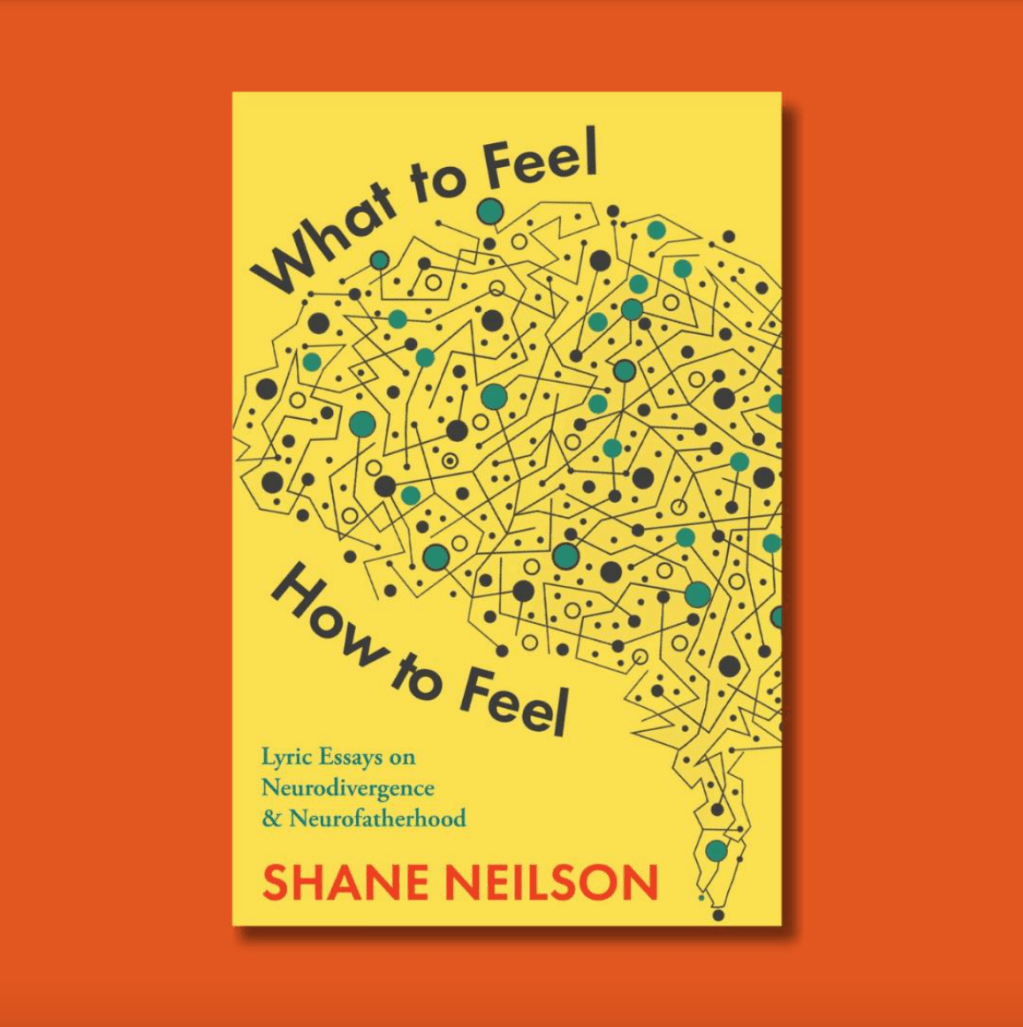
I’m not the only writer to have recently embraced the challenge of the verse novel form: at least Shane Neilson, Sheri-D Wilson, and Yvonne Blomer are also publishing verse novels this year; Jason Guriel is said to making progress on his next opus in rhyming couplets. This proliferation of artistic ambition seems to me a return to a natural process. While no one would have wanted Vermeer to paint on the scale of Rubens, it’s natural for many – perhaps most – artists to work on larger and more elaborate plans until they bump up against the limits of their ability or inspiration. This seems to me the most satisfying artistic path, particularly if one is happy with the results.
One of the key motifs in Kingdom of the Clock is an elaborate mobile sculpture representing the spiritual landscape of the city, just completed by an artist calling herself Viró. At the outset of the poem, she has neglected her gainful work and rent obligations to complete her first masterpiece, only for her unscrupulous landlord to seize the sculpture along with the rest of her belongings. Still, when she considers that she made what she set out to make:

Daniel Cowper is a writer from a small island off the west coast of Canada. He is the author of The God of Doors, which won the Frog Hollow Chapbook Contest; Grotesque Tenderness (MQUP, 2019); and, most recently, Kingdom of the Clock, (MQUP, 2025) a verse novel about city life.


 The Woodlot
One response to “From Dawn to Dawn: On Writing a Novel in Verse by Daniel Cowper”
[…] of the Persephone myth with its polyphony of voices and characters, and Daniel Cowper’s Kingdom of the Clock set in a coastal modern city with eccentric characters and vivid imagery. Although not a long poem, […]
LikeLike