

By Chris Banks
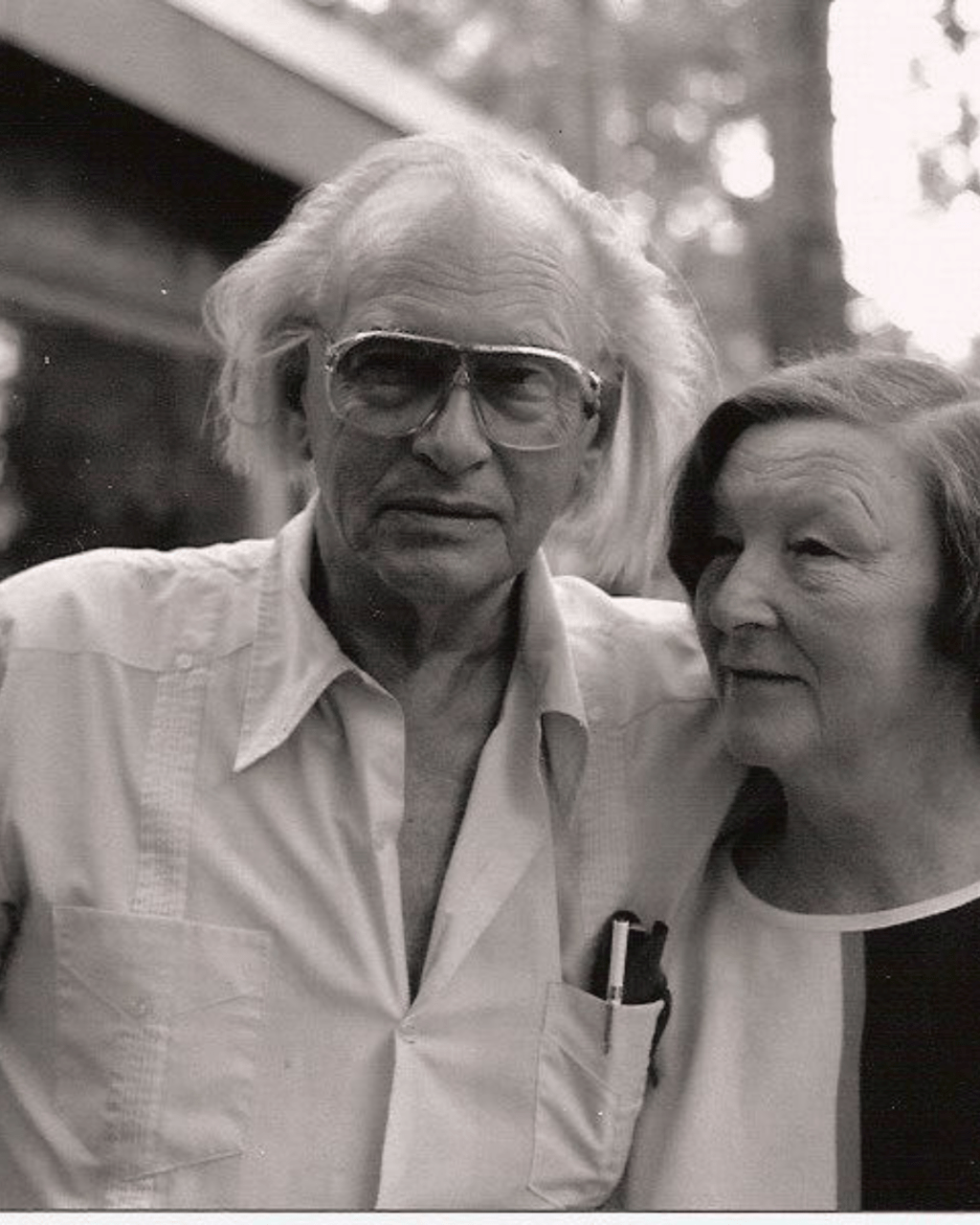
John Thompson is a bit of a sacred cow in Canadian poetry, and his poetry is a touchstone to many Canadian poets. Born in England and educated in the United States where he was once classmates with the American poet Jim Harrison, he eventually settled in New Brunswick. I encountered Thompson’s poetry over thirty years ago, like so many of us through the terrific Gooselane Editions collection John Thompson: Collected Poems & Translations.
I remember loving that book, but it has since gone missing from my bookshelves after several decades and more than a few moves, but I do have a copy of At the Edge of the Chopping there are no Secrets which was Thompson’s first book published by Anansi Press in 1973. I thought I would pull it off my shelf and take a glance through its pages to see what the big hullabaloo over Thompson’s poetry is all about, whether his reputation had outgrown the actual merits of his poetry, and as far as I can see everything that makes Thompson’s poetry interesting and special is right there in the first book: the deep image, the raw unforgiving beauty of nature, psychological struggles, the limits of language, the precision and minimalism of his lines and forms.
I read the first poem in the collection “Wife” and did not find it particularly memorable, but a couple of page turns later I came upon “Apple Tree”:
Cauldron of leaves,
the sun a deadly furnace
under the branches;

I cannot contain this summer
nor the charred dancer
exhausted
on the snow:

a head of burnt hair
crackling faintly,
the thin smoke
where a crow drifts
toward no home;

to be possessed or
abandoned by a god
is not in the language,

only the impure, the broken
green, the half-
formed fruit
we reach for in desire,

calling it
our harvest.
Wow. This is a great lyric poem for a debut collection, and not particularly because of its form which is not really interesting to me, but the images in the poem, especially in that first stanza are unconventional, surprising, lightly surreal, but also energetic and, well, ….right. The idea of looking through a tree’s branches at the sun, and seeing a “cauldron of leaves” is arresting and breathtaking, and the idea of the sun as a “deadly furnace” is taking a step further by suggesting it exists “under the branches.” Thompson had a terrific poetic education, and he was especially interested in translation, and in French symbolist poets. He even wrote his doctoral thesis on the French poet René Char which is to say even though At the Edge of the Chopping there are no Secrets is his first book, Thompson would have practised writing poems and learned to use language and images precisely through translation which is a quick way to level up your own poetry practise (this was the advice Ezra Pound gave a young W.S. Merwin but I wouldn’t know as, sadly, I am a failure with other languages).
One of the “gaps” in my own poetry education is I know very little about the French poets except for a few aborted readings of Baudelaire and Rimbaud, but I do feel the weight of Thompson’s influences in his trying to reach beyond the white page, or the limits of language, especially in his compressed short lyric poems like in his terrific “Colville’s Crow”:
This is the kind of bird
will glide into your dreams fluttering
like a leafy heart –
is this the crow you kept,
like a weird machine
in your refrigerator,
to piece out
the mechanics of the dark?
I really love this poem. I assume Colville is referring to the Canadian painter Alex Colville, but maybe I’m wrong as I cannot find a painting that might have inspired the poem. However, what I find particular interesting is the beginning metaphor, a crow gliding into your dreams “fluttering/ like a leafy heart –” which suddenly makes the actual flying bird a psychological sigil, and honestly, that is some serious associative risktaking to describe a crow as “a leafy heart” which feels to me profoundly alien, darkly animated, and grimly imagistic.
The rest of this short poem is just as interesting as the beginning, for the idea of keeping a crow, or the idea of a crow, as “a weird machine / in your refrigerator” feels surreal, koan-like, and maybe comes to represent the poet’s psychological battles kept stoppered up, or maybe it is just representative of the darker aspects of the imagination bumping up against the natural world “to piece out / the mechanics of the dark”. Either way, it is a very evocative poem.
One last poem I would like to highlight is one I remember reading thirty years ago and is one excerpted often when talking about John Thompson’s poetry. I’m thinking of his poem “The Change” which I have excerpted below:
It’s in the dark we approach
         our energies, that instant
the tide is all fury, still,
         at the full:

As that time I lost an axe-blade
         in the chopping
and listened, for days, to the rust
         gathering; and that night

I didn’t find it, but came upon
         a cow moose blind, stinking
with heat, moaning, and

hooving the black peat with
         such blood, such fury,
the woods broke open, the earth

         recovered her children,
her silences, her poems.
Again, like in the earlier poem “Colville’s Crow”, we are confronted with “the dark” as being this fertile territory, associated with the natural world and most certainly death, but also image-making and recalibrating one’s life as a poet and a human being. “It’s in the dark we approach/ our energies” Thompson writes, and as a poet who truly believes in negative capability, or waiting there in the imagination’s dark for something miraculous to happen, I’m really intrigued by this poem.
The remaining stanzas feel analogous to poem writing, or at least to me–the idea of losing an ax-blade in the chopping feels familiar to anyone who has lost “the thread” of a poem in that all-too-slow editing, worrying over lines and images, taking lines out, putting them back in, your own self consciousness bullying you into thinking you are in control and not the poem. Or maybe “the chopping” refers to everything you cut away from yourself in order to try to write poems or make a life in art.
On the other hand, the idea of Nature–wild, unpredictable, visceral, elemental, unforgiving–as represented by the cow moose seems to be the catalyst for unlocking the creative impulse and letting it roam so the earth may recover “her poems”. I think this is the tipping point or “The Change” that the title is suggesting.
Anyways, it was really enjoyable spending some time with At the Edge of the Chopping there are no Secrets by John Thompson, and I can see why its considered such a seminal debut poetry collection in Canada. I didn’t like all the poems, nor could I make sense of all of them, but I also think there are more than a handful that really push the limits of language and meaning-making, and will stay with me long after their reading. I like Thompson’s poetry very much, but I also like the myth of the man, and of course, I have shared some of his battles with addiction and mental illness. It’s really too bad we lost him so young at the age of 38 because I would have loved to read many more poems and essays by him.
Chris Banks is an award-winning, Pushcart-nominated Canadian poet and author of seven collections of poems, most recently Alternator with Nightwood Editions (Fall 2023). His first full-length collection, Bonfires, was awarded the Jack Chalmers Award for poetry by the Canadian Authors’ Association in 2004. Bonfires was also a finalist for the Gerald Lampert Award for best first book of poetry in Canada. His poetry has appeared in The New Quarterly, Arc Magazine, The Antigonish Review, Event, The Malahat Review, The Walrus, American Poetry Journal, The Glacier, Best American Poetry (blog), Prism International, among other publications. Chris was an associate editor with The New Quarterly, and is Editor in Chief of The Woodlot – A Canadian Poetry Reviews & Essays website. He lives with dual disorders–chronic major depression and generalized anxiety disorder– and writes in Kitchener, Ontario.
 The Woodlot