By Chris Banks
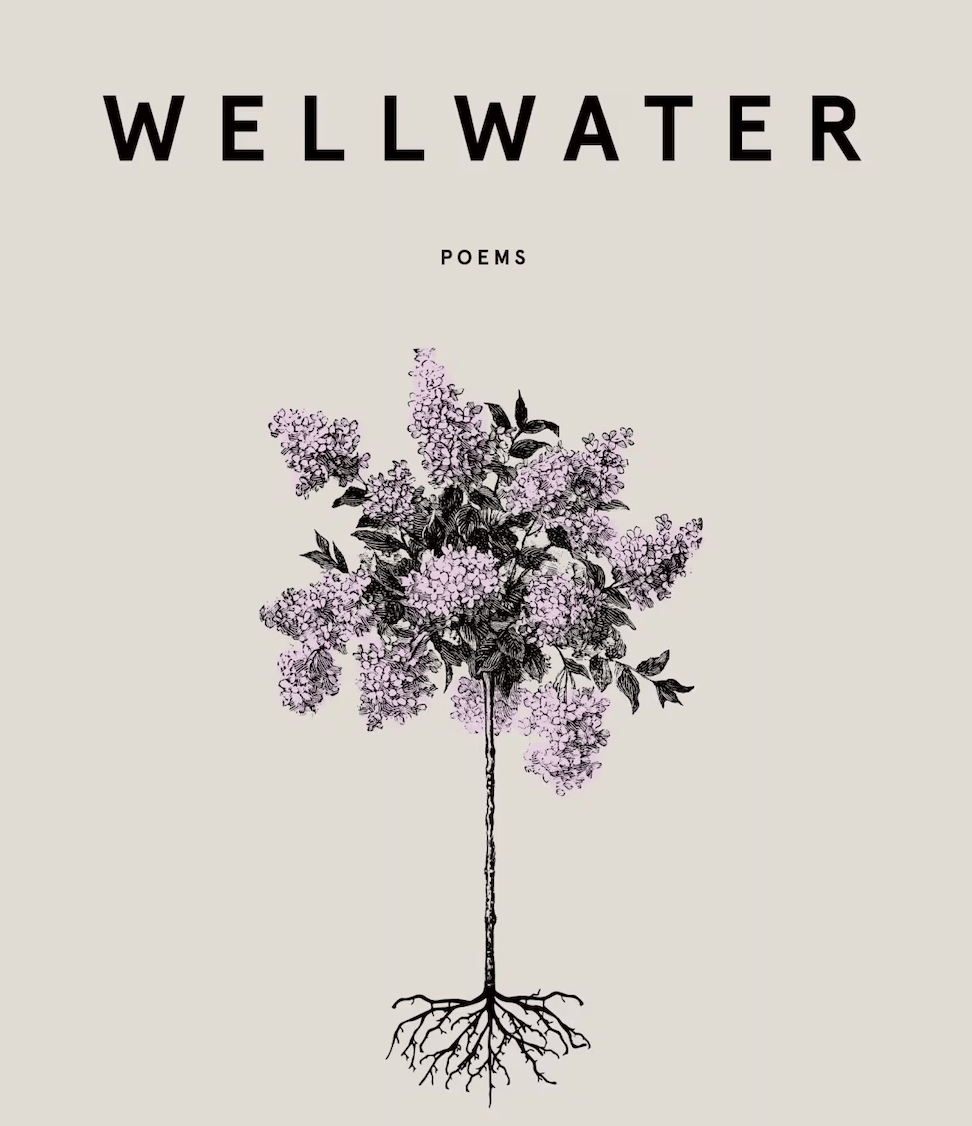
The back copy on award-winning Canadian poet Karen Solie’s latest collection WELLWATER, her sixth book, out with Anansi Press (2025), says it “explores the intersection of cultural, economic, and personal ideas of ‘value’, addressing housing, economic and environmental crises, and aging and its incumbent losses.”
I like starting this review with this idea of “value”, what is prized by bankers and poets, by middle men and everyman alike, because it highlights not just the growing disparity between rich and poor, but it also shines a light on the climate crisis, the growing tally of heat waves and wildfires, which to’ fix’ might do nothing for an individual’s 401ks, but it might just profit the entire planet by restoring and renewing our collective responsibility as stewards of this Earth–hope being its own kind of way forward.
The idea of ecological disaster is very carefully introduced in an early poem “Bad Landscape” which has a tinge of nostalgia for more carefree times, but this is tempered by the implied presence of environmental degradation that was lurking, even then, at the edges of our lives, a monstrous presence fully grown to unwieldy proportions, now wreaking havoc by way of floods and forest fires on our collective lives, making the current strategy of mere thoughts and prayers, of doing nothing unaffordable.
Bad Landscape

I can’t make it right. Not the shadow lying on the snow,
not the snow, terrain crudely toward
the poor outcome of a structure neither representational
nor abstract, and the sketched-out town beyond
ill-proportioned, depthless, and basic. There isn’t any sense
of an origin, of what Plato called the lower soul,
to animate what’s lacking with the spark of its remainder.
Better than this were the products of by-number kits
hanging on the walls of my grandparents’ home –
bird dogs, game birds –
that knew what they were, spoke at least of a steady hand
and pride in the completion of a task
for its own sake. Above the roar of the new gas furnace
installed in the living room, as there was no basement,
the volume of the brand new colour television we were warned
to keep out distance from as children. Blue light
of the programs on our faces, some of the outside
was already on the inside, the radiation we were told
was everywhere – power lines, radios, fluorescent light, telephones –
in all of what emitted that low hum of menace
we had no other word for.
Here a bad landscape painting evokes none of Nature’s essence or wonder, and becomes an implied metaphor or even omen for humanity’s ham-fisted pummelling of ecosystems with chemicals and fossil fuels and indeed radiation which is even now creating our own bad landscapes surrounding the towns we grew up in.
WELLWATER is full of references to Nature – caribou, Canadian Shield country, bluebirds, grasslands, antelopes, Norfolk pines and lilacs – but these images bump up against run-down unaffordable Sherbourne apartments, abandoned mall parking lots, gas station convenience stores, and McDonalds in the book. This sort of contrast revs the engine of human guilt and responsibility in this collection, but where does one drive off to if in every direction is evidence of an environment, “something slowly / unrelentingly, being taken apart from within”? It is a serious question.
In terms of Karen Solie’s poetic style in WELLWATER, the deft image-making she is known for is there, images both direct and philosophical melded effortlessly together, and the book is a wealth of different forms and tonal shifts like in the poem “Meadowlark” where she writes of its song “at decibels audible over / the wind, radio, tires through gravel, / through the open driver’s window / his song is like arrows of pure math / straight into whatever the heart is / its still unbroken land, its native grasses.”
There is hope for us at the end of that poem, and its insistence we need to listen to Nature, and not simply be absentee landlords which is the message I take from this poetry collection. We need to witness and take responsibility and to act accordingly beyond indifference, or “the peace of vague and benign / neglect.” Here is one last poem “Smoke” from the collection which has had me thinking all week having seen my own share of blue skies turned grey with forest fire smoke this summer.
Smoke

The first morning on waking
I thought it was fog, or mist, I thought it had rained,
but the ground was dry.

The second morning, the sun was red.
At High Level, Fox Creek, the fires uncontained
were borne on the winds they made

and to expand their sphere of influence
they burned a school. The gas and hydrocarbons found us
800 miles south

where the sky was yellow. On the third  day, by afternoon,
actions were performed out of duty, not interest.
When the red moon rose we drew the curtains.

Disabused of an illusion we say the fog has lifted,
the smoke has cleared, the dust
has settled, and now we see,

though what arises is not clarity
but a set of new misgivings. Is this how the world will be
and not just how it is?

The blossoming apple shifted key from ode
to elegy, knelt down inside itself in its halo of bees
on the fourth day.

Clearwater River Dene Nation, Island lake,
Île-à-la-Crosse, 500 miles south
Of the evacuations

in the evening of this fifth day, we’re advised
To say out of what the smoke is, its particulate
Of houses, plants, animals.
What a terrific poem, and what I really notice beyond the slow passage of time, the slow unfolding of an ecological and humanitarian crisis is how people notice how “the sky is yellow” but still go about actions “performed out of duty, not interest.” It is unnerving how quickly we have become accustomed to smoke enveloping blue skies, smoke from 800 miles north of our own houses and towns, and what we are left with is not clarity, a plan to stop it, but “a set of new misgivings”. How would Wordsworth react to this poem with its blossoming apple shifting “key from ode / to elegy”?
The answer to that question is probably with horror and deep innate shame. Feelings we all push down deep within the cellars of ourselves.
WELLWATER is an extraordinary collection by Karen Solie out in Canada with Anansi Press where not only is every syllable and word weighed for its effect, but so too its major themes which I think are the themes every poet is facing today: the climate crisis, human responsibility, late stage capitalism destroying everything, and still Nature’s persistence. In that persistence, a hope of renewal. I can see why it has been shortlisted for the Forward Prize this year, and I hope it wins.
Chris Banks is an award-winning, Pushcart-nominated Canadian poet and author of seven collections of poems, most recently Alternator with Nightwood Editions (Fall 2023). His first full-length collection, Bonfires, was awarded the Jack Chalmers Award for poetry by the Canadian Authors’ Association in 2004. Bonfires was also a finalist for the Gerald Lampert Award for best first book of poetry in Canada. His poetry has appeared in The New Quarterly, Arc Magazine, The Antigonish Review, Event, The Malahat Review, The Walrus, American Poetry Journal, The Glacier, Best American Poetry (blog), Prism International, among other publications. Chris was an associate editor with The New Quarterly, and is Editor in Chief of The Woodlot – A Canadian Poetry Reviews & Essays website. He lives with dual disorders–chronic major depression and generalized anxiety disorder– and writes in Kitchener, Ontario.

 The Woodlot