by Renée m. Sgroi
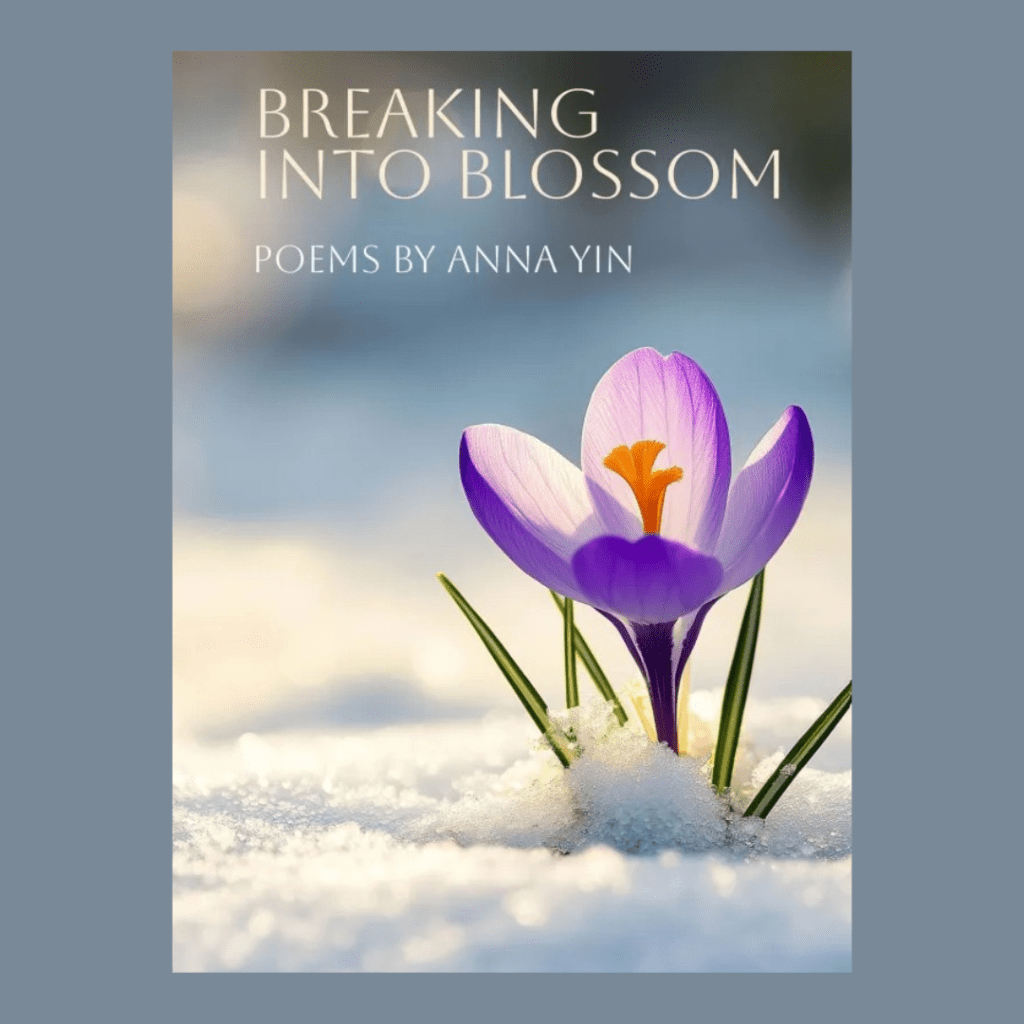
There’s a line in an early poem in Anna Yin’s latest poetry collection, Breaking into Blossom (Frontenac House Poetry, 2025), that highlights immigrant life, the distance between East and West, and what is lost and gained through translation in a way that for me echoes Pablo Neruda. In her poem “Queen Anne’s Lace”, the speaker addresses the title plant: “you thrive by the rough road”. A poem about an overlooked flower in Yin’s hands becomes like Neruda’s “Ode to the Tomato” or “Ode to the Clothes”, that latter of which ends with Neruda’s observation: “because we are one/ and will go on facing / the wind together, at night, / the streets or the struggle, / one body, / maybe, maybe, one day motionless.” Similarly attentive to the mundane, to pain and to loss, Yin’s poetry, like Neruda’s, straddles the line between life’s roughness and its aching, sad beauty.
Take for instance, “The Rare Abalone”, a poem about the title shell that an unnamed “you” (presumably a parent or elder) gifts the speaker upon her departure from home. Here, the abalone is a rare meal, as the farming of abalone leaves “your hands blistered and bled, / skin darkening, peeling”. The roughness of this work demonstrates the hardship required to obtain it — a process the speaker does not participate in since, “But your net was heavy / my hands small.” Summed up in this final meal is a life’s work, its sacrifice contained within the gift the speaker takes with her on her journey and which, in the end, she stares at from her new, distant location, “just shining, / just shining.”
There’s a mysterious quality to some of Yin’s imagery that also reminds me of Neruda, as in his “Ars Poetica”, where the focus of the poem isn’t necessarily the writing of poetry itself, but instead a “mournfulness / and a lurch of objects calling without answers, / with a truceless movement, a name I can’t make out”. In “Exile”, one of my favourite poem’s in Yin’s collection, the poem begins: “I confess, I too have / sinned for my hunger for knowledge.” These opening lines speak to the writing life, to themes of isolation, and to poetry as “‘insanity’”, a kind of wickedness where “My sin sings to the night stars / to spotlight the truth.” As with the abalone shell, there are two sides to this confessed “sin” and, as in Neruda’s “Ars Poetica”, Yin’s poem opens itself to other possibilities. For example, Yin writes: “Yet, there are waves, thousands, / rising among the silent, among the stars,”. The poet has us look around to see “the forged garden” and “the fraudulent tree” so we’re aware of the “nasty water” splashed by “Monster clams” that may also spill over we who are similarly sinning. In the end, the speaker becomes “the boatman / … My oars smashing surf—” and we can almost hear those oars in the repeated em-dashes of the poem’s last few lines. Are these oars beating against the speaker’s sense of sin? Against others who would call her ‘sinner’? Is the speaker the boatman for us, ferrying us to some distant shore? Are we towonder, as in Neruda’s work, for a name we “can’t make out”?
Exile
I confess, I too have
sinned for my hunger for knowledge.
I do not belong here,
the forged garden, the fraudulent tree.

I grow thorns and tongues
with winter snowstorms.
My sin sings to the night stars
to spotlight the truth.

I am an arrow-straight speaker, an outlaw,
chased, shut up and locked away.
Monster clams spew nasty water upon me,
and damn my ‘insanity’.

Yet, there are waves, thousands,
rising among the silent, among the stars,
voices lifting with oracle-cracked questions,
rough, ceaseless, dreamlike,
ferrying me to the wide ocean—
I become the boatman,
with thunderous drumbeats—
my oars smashing surf—
I fight water’s dark engulfing.
Ars poetica also appears in Yin’s collection primarily through her use of epigraphs drawn from the work of Li Po, Wallace Stevens, C.D. Wright, Priscila Uppal and others (though interestingly, not Neruda). As in “Exile”, Yin blends themes of loss and migration with an eye to poetry’s craft in “Blanks”, which begins: “more and more / we become blank papers / letters masked; words erased— / write-off, white-out …“. The repeated imagery of whiteness, “white mums”, “white breakers” and moons “too white for eyes to bear / too white for sight to grasp” signal the immigrant experience in a predominantly white society where “even a paintbrush / cannot summon colour’s charm—”. Despite “lost colours”, the speaker points out that “in the heavens / a stolen fire flickers”, calling up a very Western image of Prometheus, and yet, one wonders whether the poem’s ending, “we long for a voice to call out: / there is light, there is light” references the Chinese myth of the Monkey King, who possess the ability to shoot light from his eyes and who makes his appearance in several poems in this collection.
Blanks

more and more
we become blank papers
letters masked; words erased—
write-off, white-out …
even a paintbrush
cannot summon colour’s charm—
only an empty pallor remains

snowflakes stop here
one after another
white clouds drift here
one after another
clusters of white mums
ponds of pure lotuses
seas of white breakers
nights of icy moons

too white for eyes to bear
too white for sight to grasp

one sheet after another of blank papers
one mirror after another of ghost wanderers

our garden is ablaze
lost voices, lost colours
lost sleep, lost sight …

the sound of silence rolls from the distance
the sound of silence rises from the nightmare

in the heavens
a stolen fire flickers—
a long, winding path

we long for a voice to call out:
there is light, there is light
Overall, Anna Yin’s poems in Breaking into Blossom offer a portraiture that blends the seemingly mundane with the sublime, such as the dragon fruit in “Unclaimed” where exist “two pale, moon-like faces / reflecting each other,” or as in the pears in their eponymous poem. The imagery here, at times like a brushstroke, at times lush as in Neruda’s work, engages in philosophical questions without immediate closure. In this way, Yin examines the interplay of East and West, of displacement and home from both sides along the cut of halved fruit, leaving readers with resonant poems to savour.
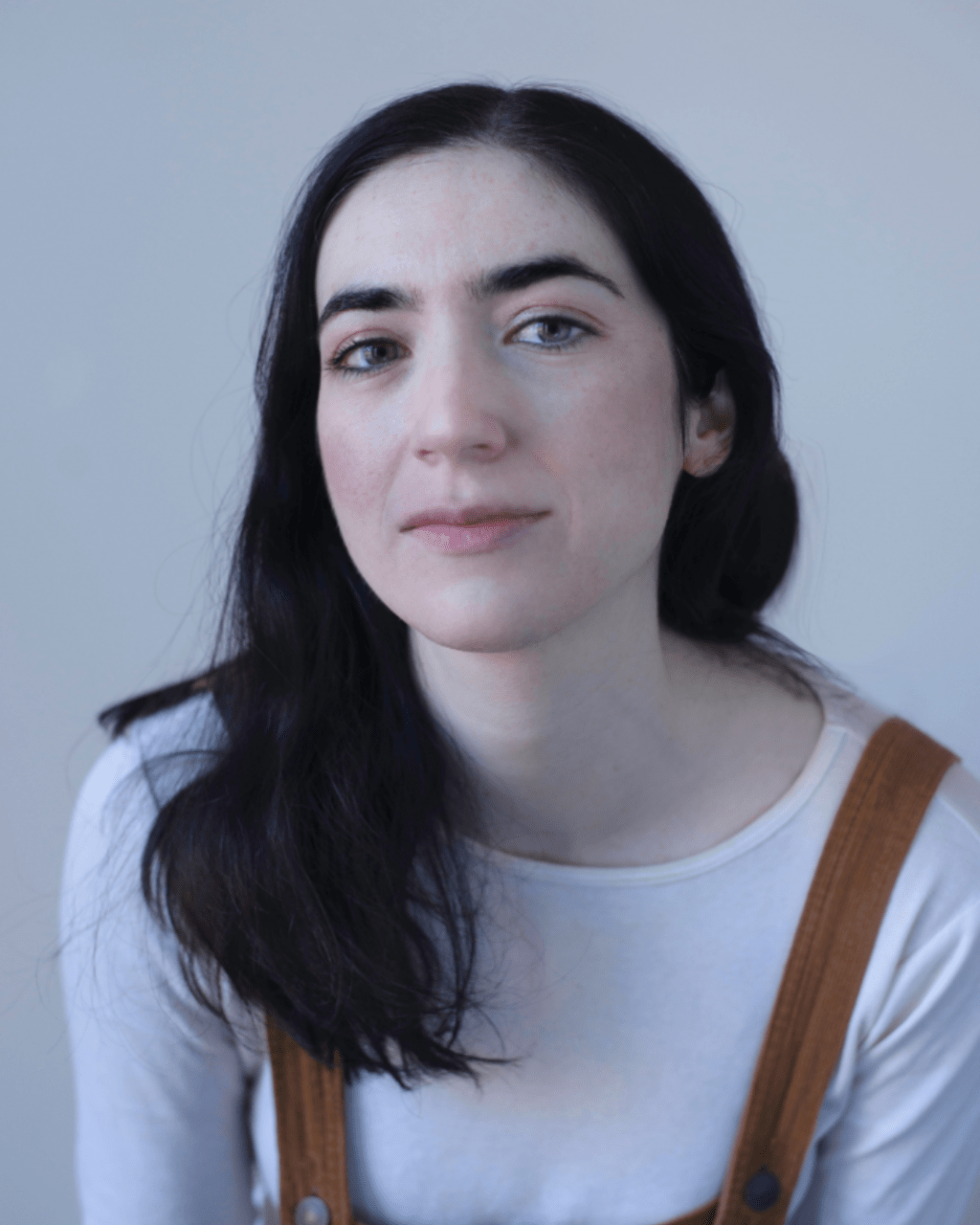
Renée M. Sgroi (she/her) is a writer and educator. Her most recent poetry collection, In a Tension of Leaves and Binding (Guernica Editions), was on the CBC’s 2024 highly anticipated fall poetry books and was recently shortlisted for an International Rubery Award. A member of The Writers’ Union of Canada and the League of Canadian Poets, she is currently at work on future poetry collections.
 The Woodlot