by Chris Banks
“For years I have wanted to write a poem called / The Garden of the Thieves“, wrote Gwendolyn MacEwen, which becomes the first two lines of her fantastic poem of the same name. It is one of my favourite poems from her last poetry book AfterWorlds. It’s a poem about sheets of paper, and grand ideas, and the Great Poem that is ultimately stolen from you. Here is MacEwen’s poem in its entirety:
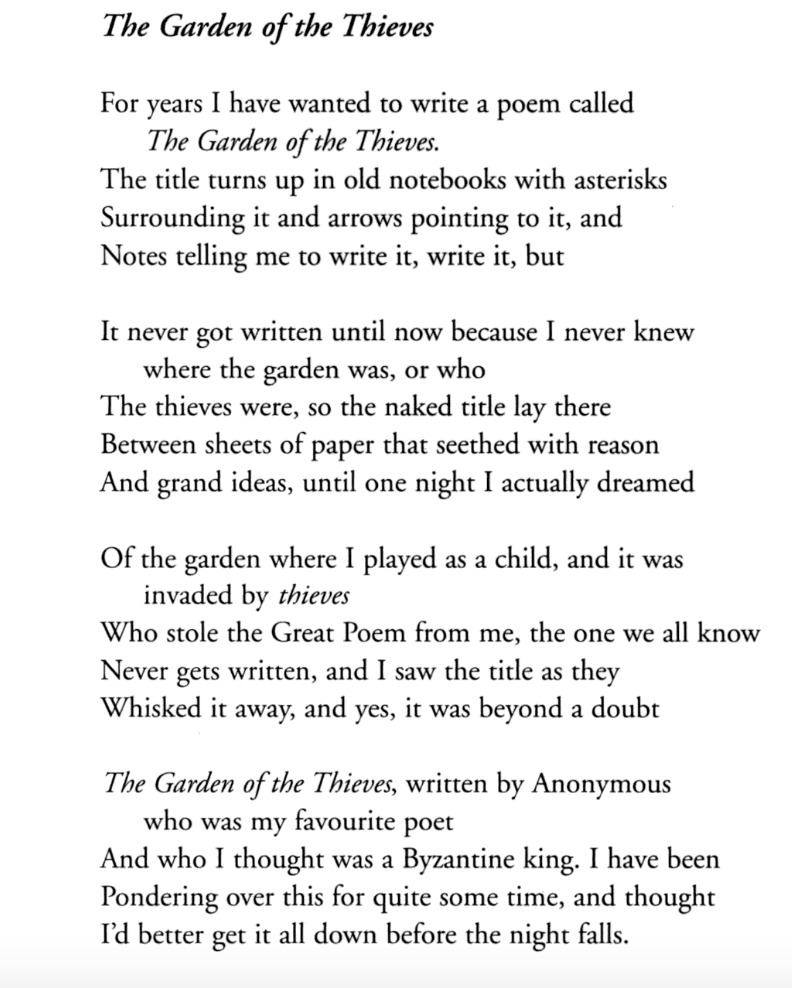
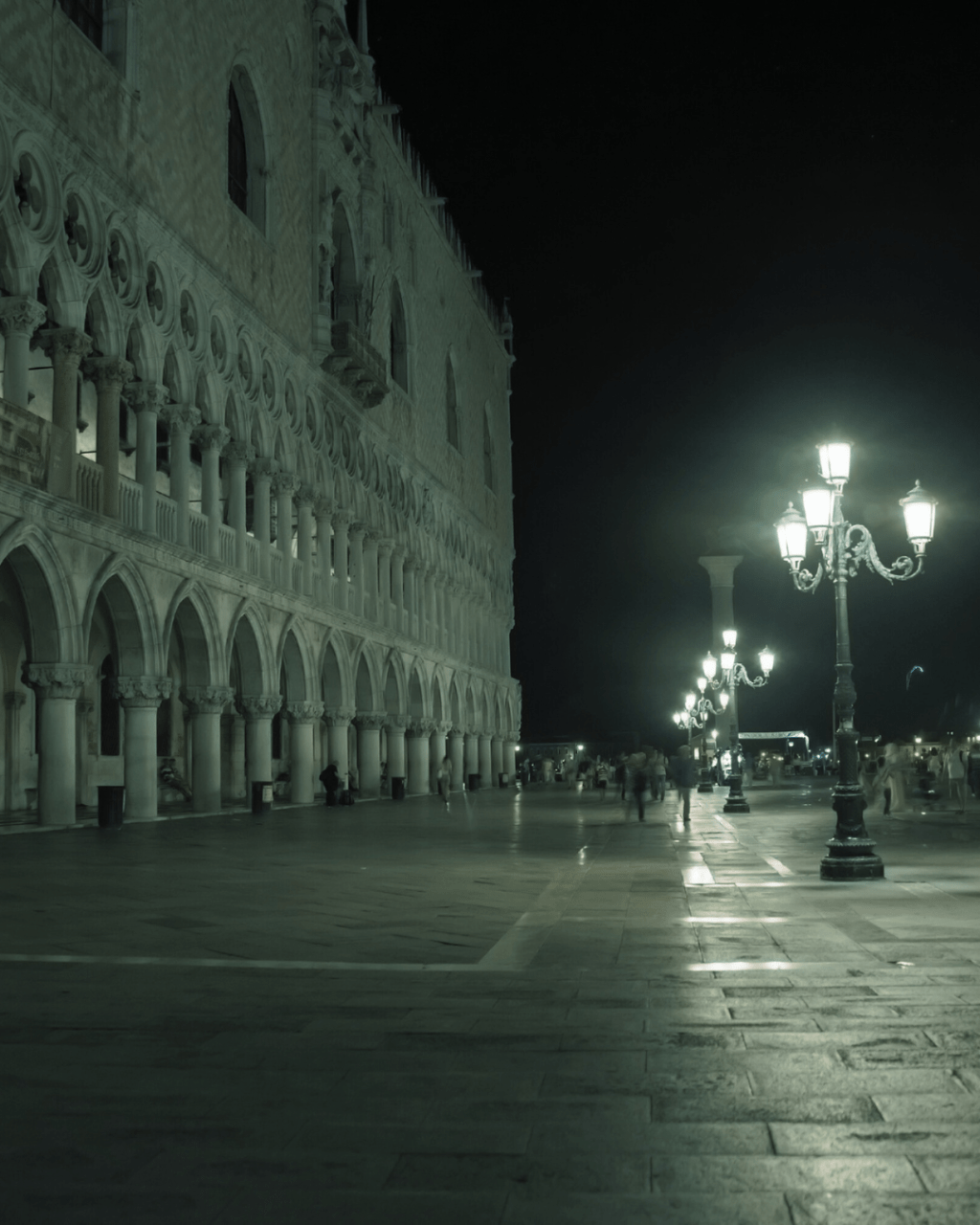
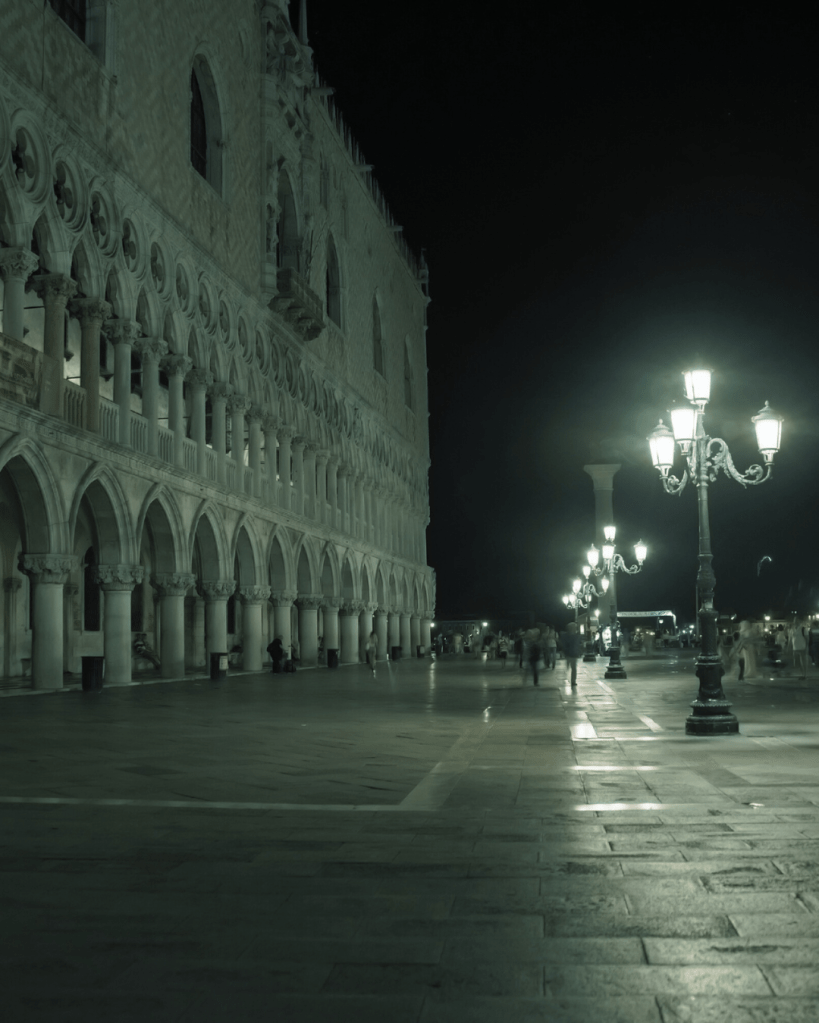
I love the idea of being haunted for years or even decades by a title or an image, and I can relate because in my Twenties I was possessed by the idea of calling my first poetry collection In The Galleria of Missing Persons. I can say without a doubt this title and MacEwen’s poem are inextricably linked in my consciousness, as I was a rabid MacEwen fan back then (I even had a photograph of her beside my writing desk), but I had not the technical power or the decades of writing experience to write the poem I really wished to write. My attempts at writing the poem felt small, feeble even, and had none of the grandeur, or the mystery, or the sense of past selves wandering about a piazza that I felt the title evoked.
Decades have past since then, but quite recently, I stumbled again upon MacEwen’s poem about a Garden where thieves stole the Great Poem from her. I smiled, and thought about dusting off my old title In The Galleria of Missing Persons. I started to read the last poems of Gwendolyn MacEwen, but also started thinking about the last poems of the great American poet Mark Strand, specifically his poem “2002” where he talks about himself appearing “In a jacket and tie, and together under the boulevards’ / Leafless trees” and strolling into a city of souls where there is a “Great Piazza”:
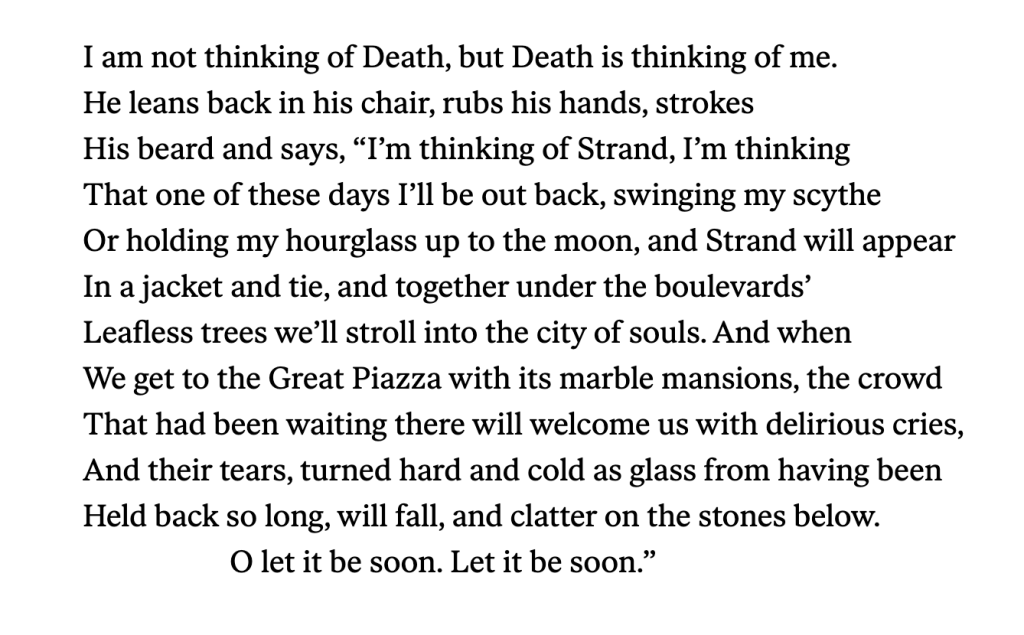
Suddenly I desperately missed the poems of Mark Strand too, so I thought about trying to write a poem, in tercets, about a Great Piazza where my younger selves wandered, but also old mentors, and lonesome poets in rumpled linen sports coats, everyone standing about in small groups, waiting to be recognized, and soon my own poem, the poem I imagined thirty years ago, began to take shape. I won’t talk too much about its overall quality. I won’t say, for instance, it’s The Great Poem that was stolen from me years ago by unknown thieves, but I am very happy to have finally written this poem, a poem with a haunting title, that hopefully reflects the large spirit and the invisible language sinews of other poets I have always admired. Here is my poem:
In The Galleria of Missing Persons

	--after Mark Strand

Who stands amongst the moon-bleached cobblestones,
against the cafés and the bars lining the piazza? Is it you
withdrawing into the dark sleeves of adjoining streets

when I approach? The olive trees rustle with night’s
brightness, and a light breeze makes a calligraphy of
sounds I cannot parse into words. All my old selves,

and mentors, gifted men in rumpled linen sports coats,
known from tiny books only, wander The Galleria of
Missing Persons, in small bands, wishing to say finally

what it means to be alive—or dead—or at the very least
to speak the silence of that absence in words so beautiful
they would embarrass even the Laureate of All Souls.

Some of you claim to be me from years vanishing. Others
I wished to be once upon a time. All wave from a distance,
but when I approach, some silver mist wraps your bodies,

and you retreat into shadows of the square, but not before
the moonlight, shining, bleeds through your translucence,
and I notice cobblestones, here and there, badly in need

of repair. Some disembodied voice in my ear says, this is
all make-believe. And true. Above the rooftops, dawn and
twilight meet, breathing the strangeness in, like déjà-vu.

By Chris Banks
Chris Banks is an award-winning, Pushcart-nominated Canadian poet and author of seven collections of poems, most recently Alternator with Nightwood Editions (Fall 2023). His first full-length collection, Bonfires, was awarded the Jack Chalmers Award for poetry by the Canadian Authors’ Association in 2004. Bonfires was also a finalist for the Gerald Lampert Award for best first book of poetry in Canada. His poetry has appeared in The New Quarterly, Arc Magazine, The Antigonish Review, Event, The Malahat Review, The Walrus, American Poetry Journal, The Glacier, Best American Poetry (blog), Prism International, among other publications. Chris was an associate editor with The New Quarterly, and is Editor in Chief of The Woodlot – A Canadian Poetry Reviews & Essays website. He lives with dual disorders–chronic major depression and generalized anxiety disorder– and writes in Kitchener, Ontario.

 The Woodlot
One response to “In The Galleria of Missing Persons: A Haunting”
[…] In The Galleria of Missing Persons: A Haunting In The Galleria of Missing Persons: A Haunting […]
LikeLike