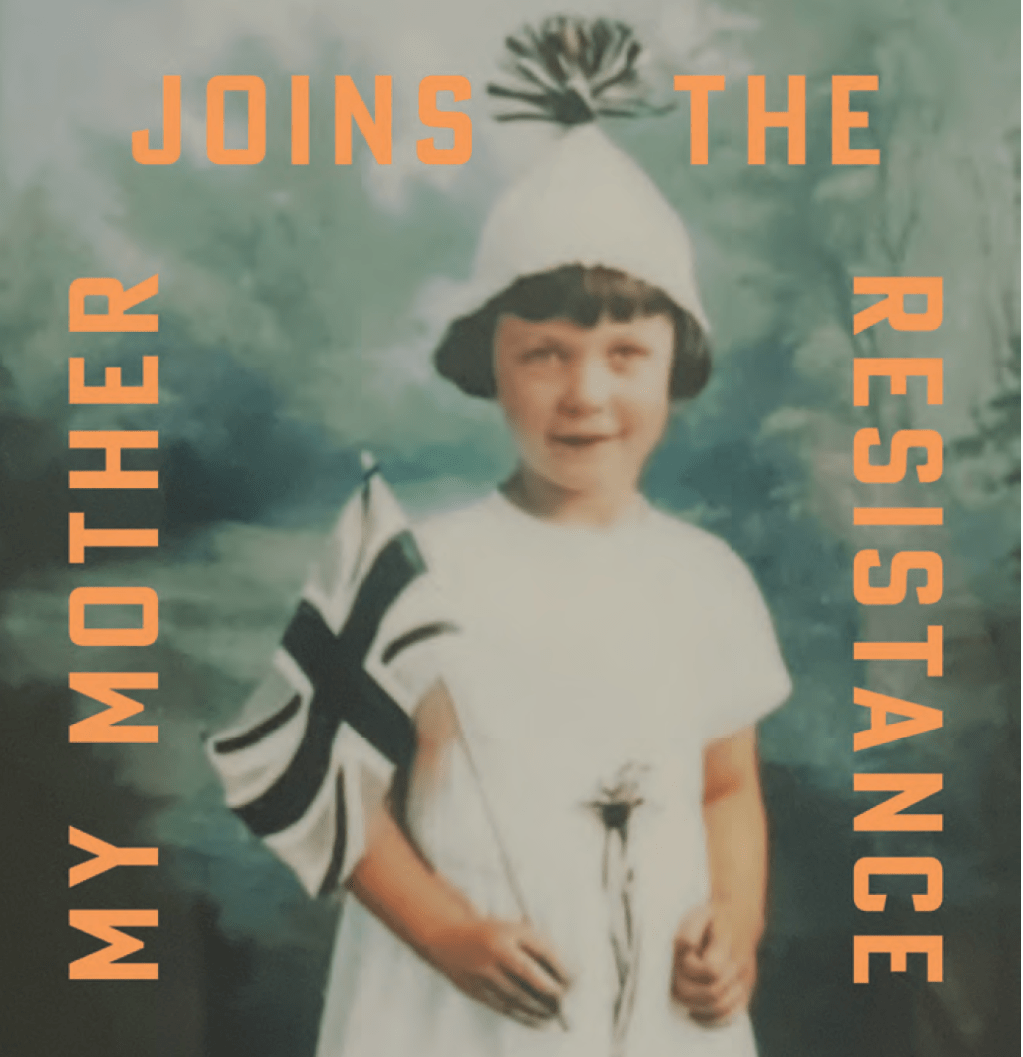
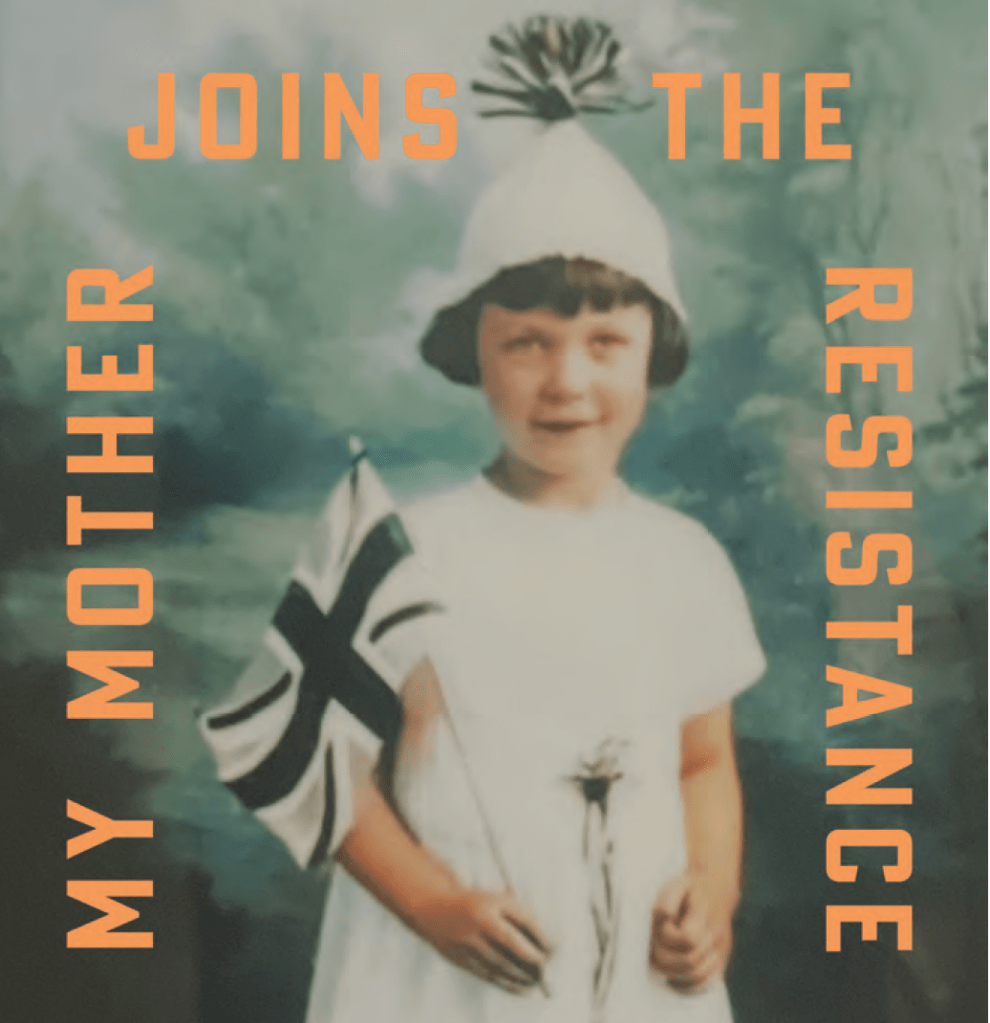
reviewed by Chris Banks
In the opening poem “The Elephant In The Kitchen” of Richard Harrison’s new poetry collection My Mother Joins The Resistance, out this spring with Buckrider Books, the poet writes “All art is its medium’s final message” which is incredibly astute and a marvel of thinking which is why I love this new collection, especially how it blends family story-telling with Harrison’s own scrapbooking of wisdom.
There is almost a rivering aspect to the structure of the poems which sort of move back and forth on the page in mainly tercets and quatrains and cinquains, but this is by no means uniform. In an early poem “A PHOTOGRAPH OF DOREEN ELIZABETH HOWARD, SIX YEARS OLD, IN 1934”, Harrison writes of his mother as a child wearing “a white dress with a hat like a tea cozy” but then also his thoughts turn toward his mother as a child preyed upon by an adult man she was sent to live with in the English countryside during World War II. The poet writes, “What children understand from birth is love. / It takes a lifetime to understand sin – if they ever do.”
It is almost as if the poet Harrison is trying to reclaim something of his mother who passed away surrounded by family members in 2017, or if not reclaim, to better understand his mother as a child of war and as a young woman who was a good swimmer, and as an older, dying woman with cancerous cells. The poet Harrison is a curator of family photographs, and the memories they invoke want I suppose, “to imagine a language that did more than / barely touch the surface of the real and unspeakable world.” Although these lines are about the poet seeing the Aurora Borealis as a young man, they could just as easily be about photographs which are a triggering subject revealing memories and personal stories and family secrets cloaked in imagery.
Besides the mother figuring prominently, there is also a father who, though much loved, is somewhat described in distant unknowable terms like in these lines from the poem “All My Life I Have Been Shielded By Violence” where the poet’s soldier father kills a squirrel that had its back legs run over by a car:
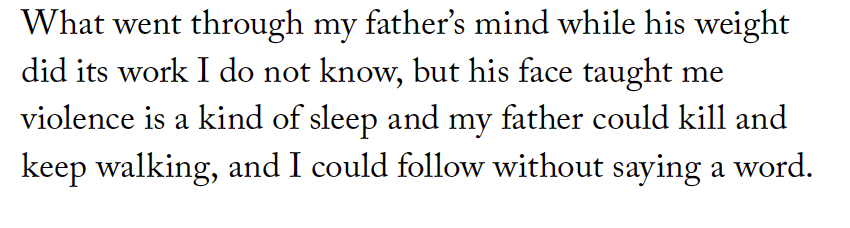
These lines really take me a little aback, the idea of “violence is a kind of sleep”, but it is really the death of the poet’s Mother which is the central motif in the whole poetry collection. Take for instance this poem called “The Doctor’s Account” where the mother’s final moments are with her family listening to much loved poems:
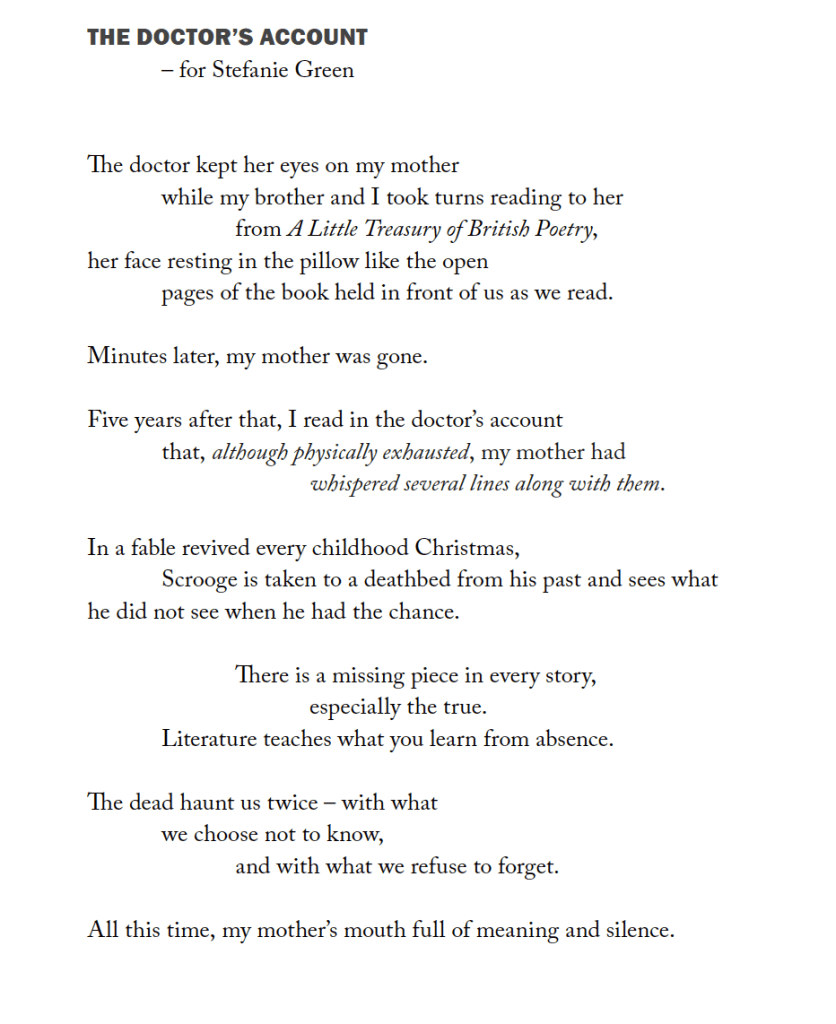
I’m not sure why I choose to excerpt this particular poem which feels like a private family event, but the last third of the poem really has me thinking, especially lines like, “There is a missing piece in every story, / especially the true. / Literature teaches what you learn from absence.” The mother’s death seems to teach the poet-son what grace, resilience, and a refusal to forget, to gloss over life’s damages, looks like. I believe literature has much to teach us about absence, and this poem is doing exactly that, but it is also teaching us how a person’s absence can change those who are left behind.
Here is an excerpt from a poem called “Cut it Out” where the poet hints Art is a sort of inventory marking the changes in our lives, but also measuring our own insights and spiritual growth:
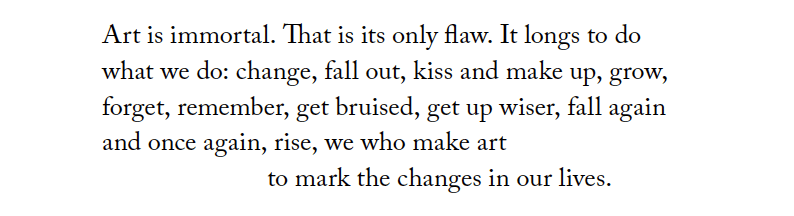
Is Art immortal? I really hope so, even if it is static–even if doesn’t change the way human lives do. In the last poem in this terrific collection entitled “On Clearing Out His Office”, the poet Harrison writes, “Poems grow around the disappearance / of what they are about” and the old hand-me-down stories, the family photographs, and the poet’s thinking about his mother’s passing certainly have clarified some of her mystery as not just the giver of his life, but as a person who carried the wounds of war and childhood sexual assault, and despite those burdens, managed to raise a family and make a life.
Going back to the opening quote about “All art is its medium’s final message”, the final message here in Canadian poet Richard Harrison’s poetry collection My Mother Joins The Resistance is profound love. The poet’s mother may be gone, but these hard-won poems remain, grown up around her disappearance, and they are a fitting tribute to the impact parents have upon all of us. Richard Harrison’s lines feel truthful, authentic, deeply poignant, and very much to me how he describes a copy of Keat’s “Ode To A Grecian Urn” neatly inked in calligraphy by his young mother while still at school in England, “wet with forever and grace.”
Chris Banks is an award-winning, Pushcart-nominated Canadian poet and author of seven collections of poems, most recently Alternator with Nightwood Editions (Fall 2023). His first full-length collection, Bonfires, was awarded the Jack Chalmers Award for poetry by the Canadian Authors’ Association in 2004. Bonfires was also a finalist for the Gerald Lampert Award for best first book of poetry in Canada. His poetry has appeared in The New Quarterly, Arc Magazine, The Antigonish Review, Event, The Malahat Review, The Walrus, American Poetry Journal, The Glacier, Best American Poetry (blog), Prism International, among other publications. Chris was an associate editor with The New Quarterly, and is Editor in Chief of The Woodlot – A Canadian Poetry Reviews & Essays website. He lives with dual disorders–chronic major depression and generalized anxiety disorder– and writes in Kitchener, Ontario.
 The Woodlot