by Chris Banks
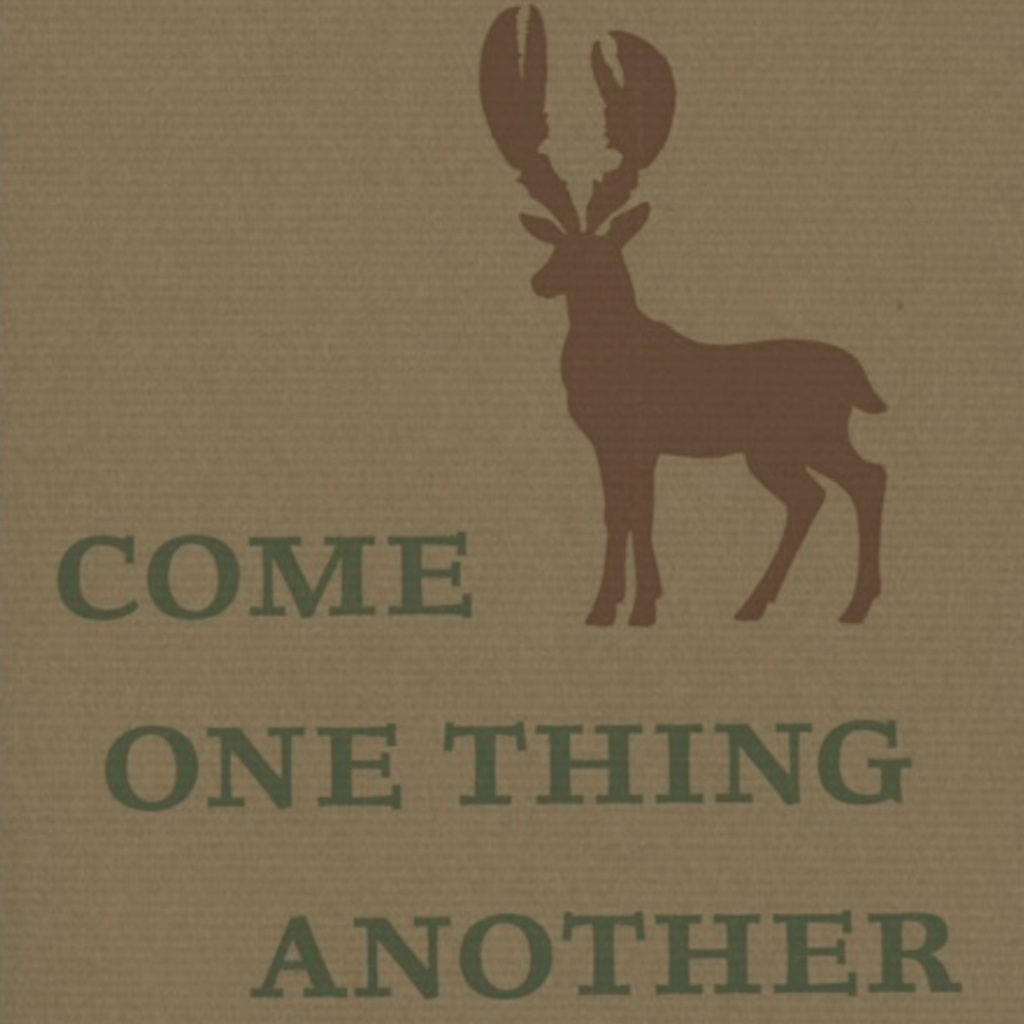
The opening of Cory Lavender’s new poetry collection Come One Thing Another begins with a epigraph from Ovid’s Metamorphoses that says, “Everything changes, nothing dies…” which is really the entryway into this book for a poet like Lavender who sets himself up as the family folklorist, taking the shadowy experiences of memory and transforming them into ordinary wonder tales, using an almost ‘electric’ mastery of rural language‘s ‘cab-wisdom’ and emphasis of elliptical rhymes and myriad poetry structures.
Lavender is a poet of African Nova Scotian and European descent which means he contains multitudes, and his identity is manifold–even if that identity early on made him feel “half-ashamed of his signature curls” and caused him to be silent about a growing feeling of “internalized oppression” – but I think it is exactly this otherness, the feeling of being other, which made him bear so much witness to the world around him and makes him the perfect curator of his family’s rich heritage, for this book is much more than a scrapbook of genealogy: it is one of tall tales, of personal transformation, and of turning the ‘infernal dials’ of language all the way up. I mean, way up!
For instance, Lavender does some incredible things with language in his poem “Saturday Nights Out To The Roys’” which I really love for the word-play and the cards night rural authenticity, and Lavender’s own ‘gift of the gab’:
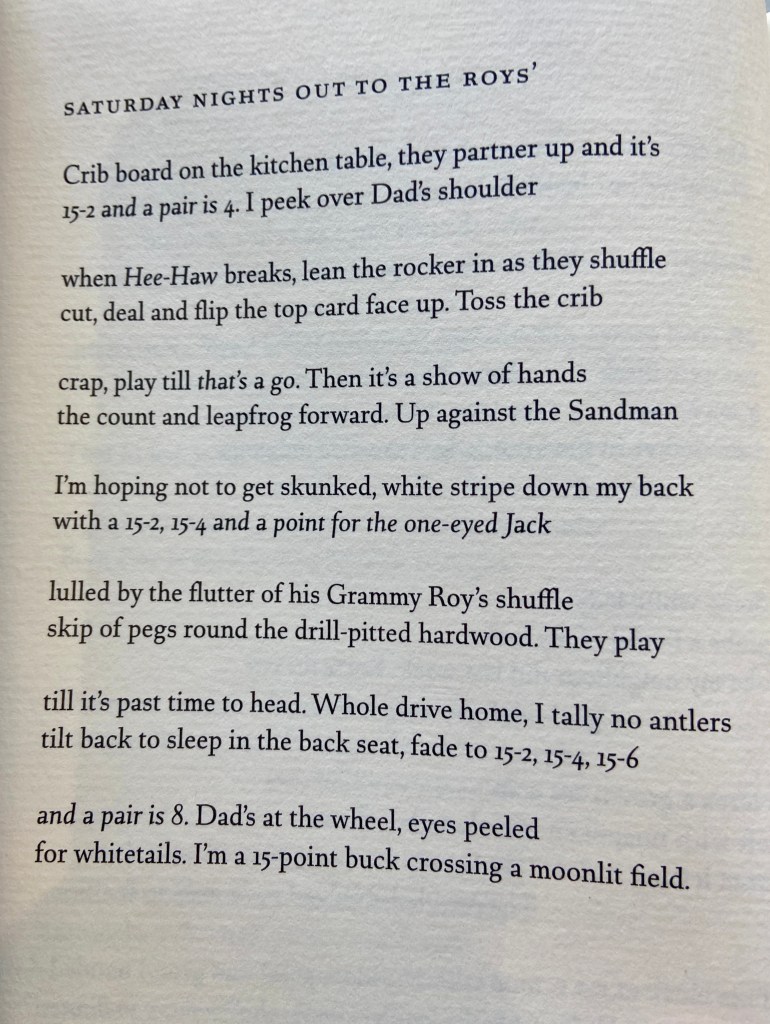
I am envious seeing how Lavender can so expertly weave in consonance, assonance, and rhymes that not quite go where you expect them to go in his poems. I cannot do this with language, so I always feel a little jealous when I see others able to ratchet in so much word-play like these carefully-crafted couplets that sometimes end-rhyme, and sometimes do not.
Another poem that showcases Lavender’s immense gifts of language is “Forecast” that talks about his father’s stroke and his need for a stent (like a little umbrella) in his heart.
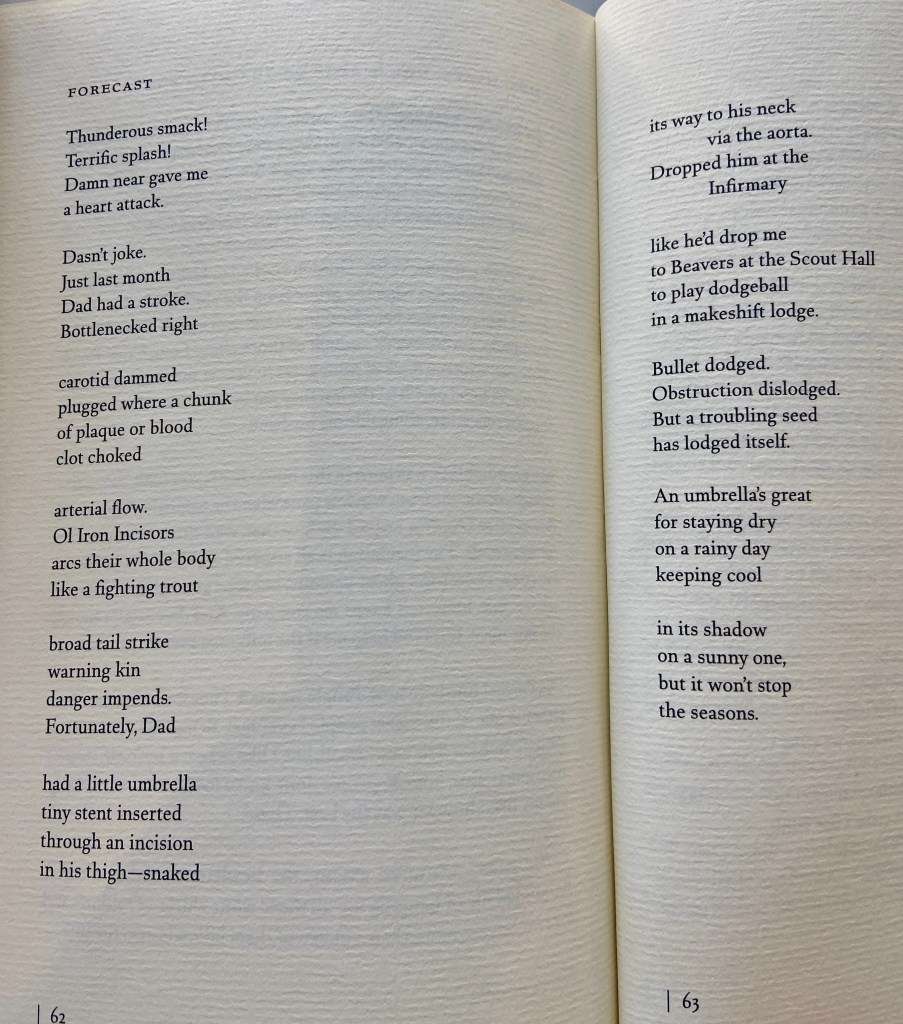
If you read this poem aloud, there is a lot of syllable-juice and ‘thunder-clap’ epiphanies like when the poet says, “Dropped him at the / Infirmary / like he’d drop me / to Beavers at the Scout Hall / to play dodgeball / in a makeshift lodge” and in the very next lines “Bullet dodged, Obstruction dislodged.” There is so much going on acoustically, and on the page, in these five lines. First, you have the end rhymes of Scout Hall and dodgeball, you have the ‘makeshift’ lodge which conjures a few readings at least to me, and then the juxtaposition of the poet dropping his father at the Infirmary like he was once himself dropped off at a hall in a brown and blue Beaver uniform (so was I!). And of course, the ending is a real show-stopper with its lines, “An umbrella’s great / for staying dry… … but it won’t / stop the seasons.” Really, a wonderful poem!
The press release for Come One Another talks about the persistent transformations of people and places in this book– and these transformations pervade the whole poetry collection like in the poem “Lawson’s Father Alden Roy’s Dyin Transformation” where the advice from a maternal great-great grandfather is, “you got to learn to think like [a deer]” and “Rickey’s Two Cents On Owls” where the dominant image is of a Snowy Owl’s camouflage: “All ‘I’m only snow’–plays it cool. The second prey strays by–explodes.”
Come One Another is a powerful debut from a poet who know he is, and knows what cards he is holding, and maybe these poems won’t stop the seasons, or repair the past, but they do celebrate his family’s folkloric tall-tales and rich heritage which is stitched throughout using Lavender’s ‘gun-crack’ language which is both colloquial and masterfully controlled and above all else, life affirming.
Chris Banks is an award-winning, Pushcart-nominated Canadian poet and author of seven collections of poems, most recently Alternator with Nightwood Editions (Fall 2023). His first full-length collection, Bonfires, was awarded the Jack Chalmers Award for poetry by the Canadian Authors’ Association in 2004. Bonfires was also a finalist for the Gerald Lampert Award for best first book of poetry in Canada. His poetry has appeared in The New Quarterly, Arc Magazine, The Antigonish Review, Event, The Malahat Review, The Walrus, American Poetry Journal, The Glacier, Best American Poetry (blog), Prism International, among other publications. Chris was an associate editor with The New Quarterly, and is Editor in Chief of The Woodlot – A Canadian Poetry Reviews & Essays website. He lives with dual disorders–chronic major depression and generalized anxiety disorder– and writes in Kitchener, Ontario.