by Kim Fahner
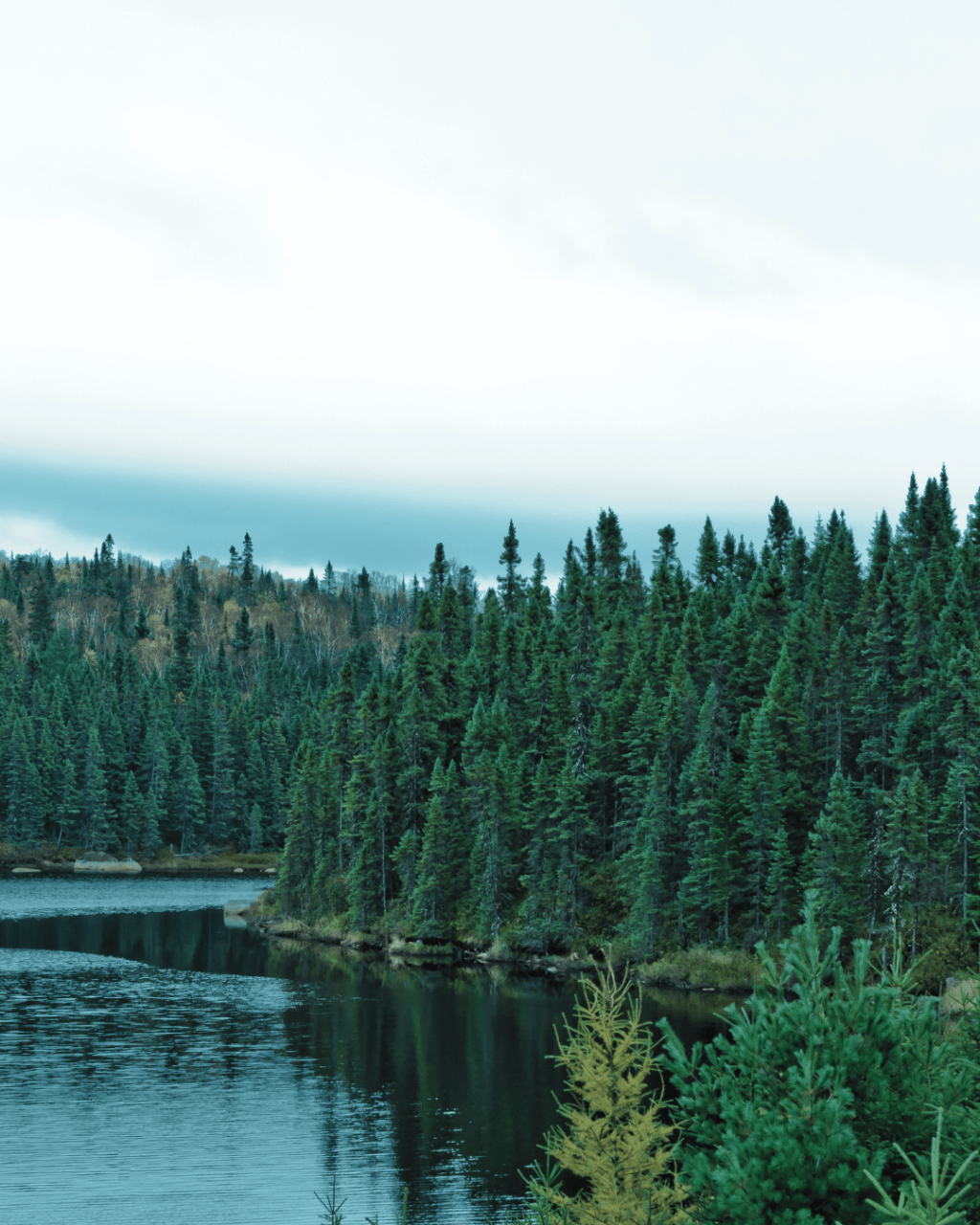
I’ve been thinking a lot about what it means to be a poet outside of a larger, urban centre—and, even more, what it means to be a poet and writer living and working north of Barrie, Ontario. For so many of Ontario’s “southerners,” in passing conversation, Muskoka is referred to as “the bush,” but for people who live north of Parry Sound, it all changes when the landscape gives way to the rough rock cuts and tall pines on either side of the highway. That’s where the bush starts. Please don’t tell me otherwise.
Ironically, Highway 69 is one of the province’s deadliest highways, and a lot of that has to do with it only being two lanes. For most of the decades of my life, I’ve listened to northerners lobby our MPPs for “four-laning”, to reduce the number of fatalities—when cars collide with transports, moose, or rock cuts. What southerners take for granted—wide, well maintained, multi-lane highways—we northerners fight for. It’s a different province for those of us who live north of Parry Sound and sometimes I think I’ve made it up, but at other times—well, at other times, I see how different Southern Ontario writers’ lives are than mine. I watch from the outside, peering in through the lens of what social media feeds offer me.
A few years ago, I was invited to be on an Ontario Arts Council (OAC) jury to offer a northern perspective for a literary panel and when I asked the other jurors who had been to Northern Ontario, one smartly replied “I’ve not been north of St. Clair!” It was that specific comment that made me realize how important it is to have northern jurors on provincial panels, and to have a Northern Arts grant from the OAC. Years ago, there were political movements—started by people who live up here—to have Northern Ontario separate from Southern Ontario. It made sense to me then, and it still makes sense to me, but I think only Northerners would truly understand why.
From up here, in Sudbury, and through the distorted and illusory lens of the internet, I can watch the flurry of book launches in Toronto, Hamilton, Victoria, Vancouver, Montreal, and Ottawa, and just sigh a bit. Up here, writers live at a distance from the places where the literary arts communities flourish and are at a disadvantage just because of our geography.
I think of a Cape Breton writer who, a couple of years ago through my volunteer work in The Writers’ Union of Canada (TWUC), emailed me to say that living up in Cape Breton meant they didn’t feel included in things that happened down in Halifax. I nodded my head in agreement that day, and replied to say that I understood. I couldn’t fix it, but I could empathize with them.
For all the talk of diversification of voices, one of the voices that is so often silenced is that of the writers who live in smaller places across Canada. But, when I go to an Open Mic at Books and Beans in Sudbury’s downtown core, I can hear poetry by newcomers to Canada, and hear work written by young and emerging poets who are fighting to create a community that includes and reflects their diverse, lived experiences. Veteran poets read alongside emerging poets. It’s less about selling books and more about creating a literary arts community in a town that still has mining, hockey, and country music as its lifeblood underneath the surface of the geology here. Despite the city’s public relations work in tourism campaigns on Instagram, if you scratch the surface here, you’ll still find a mining town at the core, with secondary and tertiary industries that have sprung up around that headframe culture.
When I look to social media lately, it all just sounds so loud and distracting. It makes me want to cover my ears, like when I was a kid, and so I’ve spent less time online lately, and more time creating a quiet space inside my head so I don’t feel like the world is on fire. Of course, the world is on fire, and for someone who’s had mental and physical health challenges for a long time, I need to find that silence to anchor myself. Sometimes, Jeremy Dutcher helps when I need music in the house, but it’s mostly a quiet place with a snuffly little dog who is named after a dead Irish poet I loved.
Podcasts abound. Don’t get me wrong: I love podcasts, and I love talking with other writers about poetry and writing in other genres—but it’s a sea of podcasts now and I can’t imagine all writers are listening to every single one. I have a few favourites, but part of my current challenge to myself is to get more analogue. This means less time online, less time on my phone and social media, and more time reading poetry and trying to get better at writing it. I used to think I had to keep up. How strange is that? How can a Northern writer even imagine keeping up with a writer from a southern or urban centre? Impossible. And, in what has become a fast-paced prize culture in Can Lit, and a flurry of marketing and reels and reviews, I have found myself feeling more and more isolated.
Tanis MacDonald’s book, Out of Line: Daring to be an Artist Outside the Big City (Wolsak and Wynn, 2018) is one I always recommend to writers from larger centres. Tanis is a friend and mentor, and we first met when I interviewed her on a panel in Windsor, at Biblioasis Bookstore, back in August 2018. I kept nodding as I read her book, underlining pieces of truth like “…even with all this evidence of small-place arts communities, the dynamics of belonging and not belonging are complex,” or “Always tell people where you come from,” or “There can be no denying that there is sometimes envy between artists.” There is also the reminder that we create art, “because we love it. We do it because it makes sense of the world for us. In the hyper-Warholian present/future, when everyone is famous for fifteen seconds, accountability is precarious and ceaseless self-promotion is the currency on social media, what is fame? What is success?”
For me, what rings true is that all of that literary fame stuff is an illusion, and that—on my deathbed—I’ll just know that I kept on creating, writing, encouraging emerging writers through mentorship, and trying to build community of writers and artists in my small northern town. I’ll bloom where I’m planted and I’ll keep writing, even when I feel isolated and sometimes lonely.
In April’s issue of The Woodlot, Chris Banks wrote a piece about the loneliness of being a poet on the outside of things, and of being a middle-aged poet on the outside of those city-centred literary events. There’s a sadness there, too, in having to have had to try extra hard to meet other poets and writers who don’t often come north. For those of us up here in Northern Ontario, meeting writers means going south. Without the internet, and without the pandemic—honestly—I think I’d be less connected to my writing community friends, so I am thankful to Zoom for that doorway. When writers question the validity of online gatherings or meetings, I shiver, knowing that—for me, and for many others who don’t live in the major centres—the online platforms for connecting with other writers allows me to talk to people about ideas, poems, stories, new publications, and just to ask how they are doing.
Chris wrote about how people are political, and I feel that, too. In the North, we tend to be political about different things than folks are political about in the south. Here, we speak up about the four-laning of Highway 69 and of how many people we’ve lost to accidents on that road—because we sometimes know them, and their families. And we speak about fighting for better health care because we have long waits for specialists and often have to travel south for access. And we speak about the safety of our mines when we lose miners to rockslides. And we speak about protecting our conservation areas and natural beauty for future generations of Sudburians, including places like Bennet Lake, which have been threatened by development. And we fight against movements to dump Southern Ontario radioactive rubbish in empty Northern mine shafts without contemplation of how it might affect the environment up here. And we speak about how a drive southwards will slowly show us how much more the south tends to get in comparison to the North. It’s visible to us, but I don’t know that it’d be visible to someone coming North from the South unless they were making that trip between worlds fairly often.
In his essay on loneliness, Chris wrote about that “apartness” and isolation from a male perspective, but I also feel it up here—in Sudbury—from a female perspective, so I actually think it’s tied to the illusion of what’s put out by social media within the literary community. What seems like community building efforts looks different to me up here and can feel very overwhelming. I think, too, our community and political fights are different, and our arts communities are more at risk when you consider that the folks in a mining town might not want to go to the symphony, art gallery, poetry book launch, or theatre as much as they might go to a Sudbury Wolves game, or hang out at the Townehouse Tavern, or get out into the bush on their quads.
There’s a different culture here. We don’t have an indie bookstore, so lobbies against Indigo can be complex when you haven’t got a bookstore to drive to. Yes, we do order from small presses and indie bookstores elsewhere, but add in the shipping fees, and you’ve got a bit of an economic discrepancy between regions—just within one province. Sometimes, I wish people from the south could see the differences beyond where they live, but I know that would only come if they chose to drive northwards, to see the rougher sides of resource-based towns that fuel Southern Ontario’s economy in often unseen ways.
If you know me, you’ll know that I’m pretty quiet in my daily life. I’m a teacher and I’m a writer. I fight for the literary arts in my city because I know that—if we lose our Poet Laureate position, or if Wordstock, our literary festival disappears—those things won’t come back. I know that they are crucial to Sudbury having a literary culture. If we don’t try very hard to create literary community here—and across Northern Ontario—then the cultural projects that do get funded are at risk of disappearing. So, when I do speak up in Sudbury, I push politically and culturally for the literary arts here, first. I always have and I likely always will. If I seem quiet elsewhere, on social media especially, maybe it’s because I’m louder here in my real, day-to-day life, to be sure that the arts scene and the environment will be protected here for a long time.
Kim Fahner lives and writes in Sudbury, Ontario. Her most recent books include the bee poems of The Pollination Field (Turnstone, 2025) and her debut novel, The Donoghue Girl (Latitude 46, 2024), which is a story set in Northern Ontario. Kim is the Chair of The Writers’ Union of Canada and is currently working on finishing a collection of essays. She may be reached at Kim Fahner – Poet, Playwright, Novelist, Teacher.


 The Woodlot