by Chris Banks
I’ve been thinking a lot about nostalgia this week maybe because last Saturday night I went to see a cover band play the music of The Smiths, a band I associate with being sixteen years old. I still see myself playing their records on a little black turntable on a red dresser in my basement bedroom decorated with huge Sex Pistols posters I procured from a Head shop in downtown Toronto.
Or maybe it’s because that feeling of nostalgia, a sort of homesickness for a home that never really quite existed permeates so much of modern contemporary poetry. As as poet, you learn quickly that childhood, one’s memories, are terrific subject matter for generating poems, but why exactly?
Partly, I think its because of the feeling of exile it engenders. Nostalgia is a ghostly mansion of many rooms, full of friends, and nearly forgotten places, and pop-synth music, and Brat-pack movies and after school television shows that have all receded from the present. Like going down a “rabbit-hole” of 1980s MTV era music videos on Youtube where, you can, if not revisit the past, revisit “moments” that make you remember how you felt, what you thought, all the while clarifying the distance you feel from that time in your life. Nostalgia is sadness, but tempered by an in-dwelling joy.
The used to be, of youth, still far sweeter than the never having been.
I think it’s the emotional complexities nostalgia evokes which poets respond to as depending on a poet’s particular personal identity, one can be nostalgic for art, or “hometowns”, or even faraway distant countries. In an essay about Hope and Nostalgia over at the Poetry Foundation website, Leonora Simonovis writes, “For exiles, writing is also about re-locating the self and reconfiguring notions of home-land. In my case, home is not necessarily a place, but a state of being: home is wherever I am.”
I love this idea of home being wherever one finds oneself, but the rolling currents of yesterday are strong, and the siren-song of nostalgia hard to resist as it tries to pull you back towards a shadowy past, deep-down, you know you might partially glimpse, but never reach.
Another recent essay over at the Poetry foundation suggests poets are nostalgists for we love the ache of it, but warns against liking the ache a little too much. In his essay “On Nostalgia, Ever Cleaner, Ever more Pillowy”, Boris Dralyuk states, “ There is often a sweetness to nostalgia, a sugar coating that, left unchecked, thickens until it obscures the painful kernel. The longing for a past purified of its faults—or a past we never knew firsthand, encountered only on the page, on the screen, or in tales told to us before sleep or from a podium—becomes an indulgence. What makes nostalgia difficult to treat honestly in poems is how easily some of us fall under its spell.”
This is the crux of the problem with nostalgia in poetry for, left interrogated, it turns the past into an unblemished Eden one can never return to, one which erases the hurts and uncertainties and bitter truths of that period in your life. I wrote a poem once called “All Night Arcade” in my book The Cloud Versus Grand Unification Theory which has a line that says, “Nostalgia is a verdict for not living well”, and what I mean by that is although wistfully thinking of the past can be a sweet indulgence, it can also make you resentful of the many hardships, insecurities, and other obstacles the present throws into your path if you overly romanticize looking backwards over the span of your life.
Like Dralyuk, I like poems that sort of flirt with nostalgia, but also are clear-eyed about the pain stitched into the fabric of times gone, or if not clear-eyed, exactly, at least hint at “the painful kernal” he alludes to in his essay. Memories are always an approximation of what happened, anyways; not actual facts. They are not the people, nor the places. Memories are phantom stories, familiar illusions built up over years which incorporate feelings and the foreign and the strange, making nostalgia both a comfort and a bittersweet ache for a time that didn’t really exist in the way we remember. That we can touch the past in a poem for a moment is a wonderful thing, but we can’t live there for the many rooms of the past are full of absence, and for better or worse, our lives are lived in the here and now.
All-Night Arcade


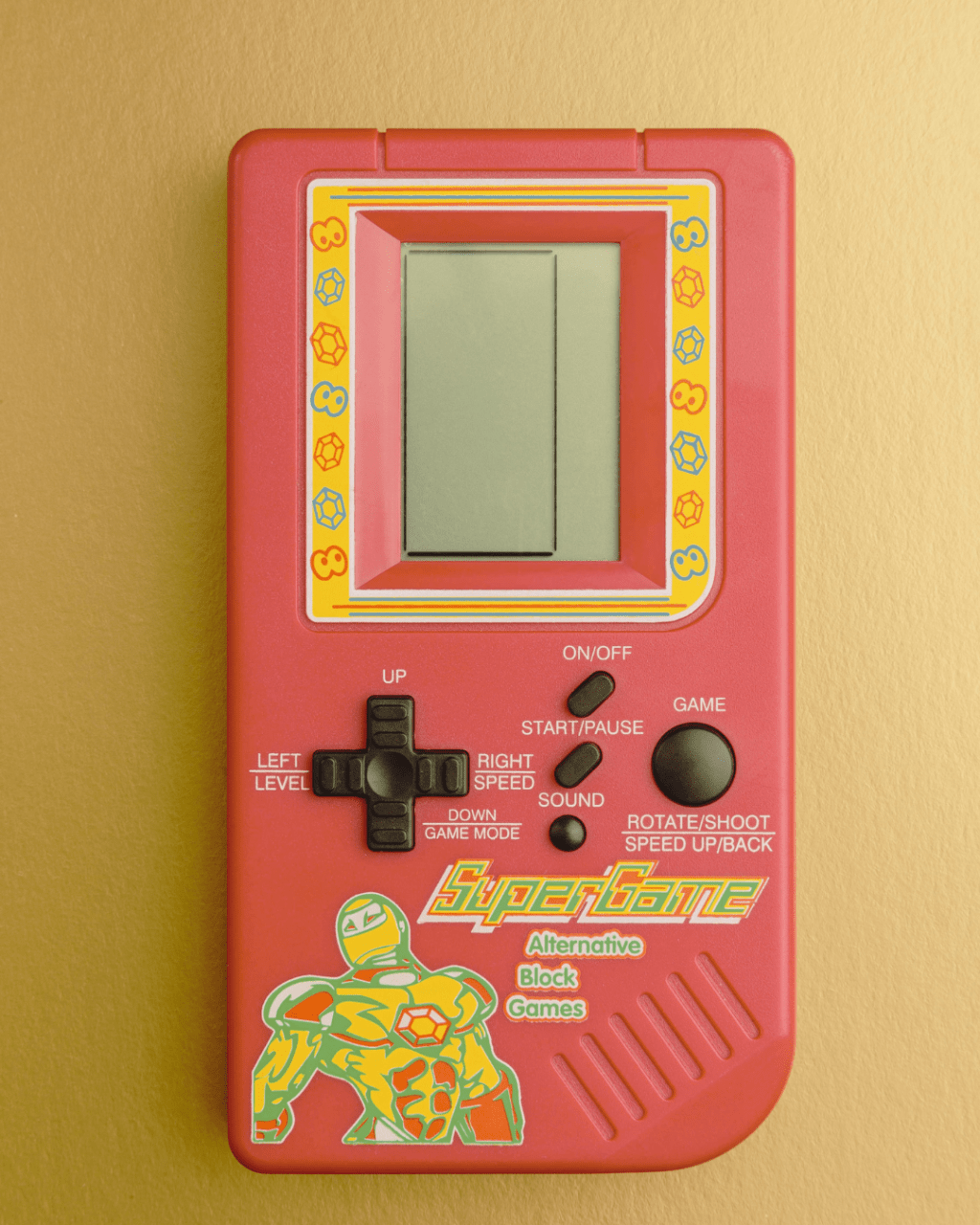
I am playing Galaga in my imagination
in the last century where all around me
kids packed tighter than bees in a hive
labour to master rows of arcade games,
crowding to witness if anyone makes it
to a new level, beats an old high score,
wipes out an army of extra-terrestrials.
Time and space stand still for the price
of a quarter. Pixellated blooms burst in
neon cascades across our beatific faces
while the world drags on into the ruins
of the Eighties. Ronald Reagan is shot.
The great hurts and loves of this world
enter into us. Childhood one more urn
in History’s mausoleum. Psychedelic Furs,
My Bloody Valentine, The Jesus and Mary
Chain. Mix-tapes for a generation who
witness the Challenger explode,
the Exxon Valdez spill, the Berlin Wall
topple with an empire. In our twenties,
the arcades vanish. The circumference
of the planet enlarges. We leave home
for school or to work jobs in big cities,
summers in Europe, but time is theft,
and we soon ascend to the next round,
a millennial collect-a-thon with all new
obstacles to jump over, skill challenges
to undertake. More enemies, less lives.
Nostalgia is a verdict for not living well
which is why in my forties all night long
I sit here watching myself as a teenager
play a video game with time running out,
a pilgrim trying to get to the golden city
at the last level, knowing when the game
is over, neither he nor I will continue.

By Chris Banks
Chris Banks is an award-winning, Pushcart-nominated Canadian poet and author of seven collections of poems, most recently Alternator with Nightwood Editions (Fall 2023). His first full-length collection, Bonfires, was awarded the Jack Chalmers Award for poetry by the Canadian Authors’ Association in 2004. Bonfires was also a finalist for the Gerald Lampert Award for best first book of poetry in Canada. His poetry has appeared in The New Quarterly, Arc Magazine, The Antigonish Review, Event, The Malahat Review, The Walrus, American Poetry Journal, The Glacier, Best American Poetry (blog), Prism International, among other publications. Chris was an associate editor with The New Quarterly, and is Editor in Chief of The Woodlot – A Canadian Poetry Reviews & Essays website. He lives with dual disorders–chronic major depression and generalized anxiety disorder– and writes in Kitchener, Ontario.