by Dawn Macdonald
I didn’t know there was an inside to be outside of. I thought poetry was in books, and books, through the magic of Canada Post, can go anywhere. Sure, I knew that Toronto considered itself the centre of the universe, but what would I care about Toronto? Torontonianism isn’t anything to which I’d particularly aspire. It’s just something I don’t really know too much about.
Quick backstory: I’m from the Yukon, born and raised in and around the capital city of Whitehorse. My upbringing was especially rustic, a ways outside of town in a ramshackle cabin with no electricity, no running water, and a radio phone for telecommunications. There was not a lot of money, partly because of my parents’ non-materialist values. I sometimes say I grew up orthogonal to the class system. There’s no money, and your clothes are second-hand, but you’ve got moose meat and wild cranberries so you’ll eat okay, and the wilderness is without price. I’m older now; I’d gone away and come back and had a long, circuitous path to poetry publication. I’m not a total hick, but I’ve come from and returned to a place that’s fairly remote, though much less so than it was in those pre-Internet days when a long-distance telephone call cost a dollar forty a minute and airplanes were for rich people.
At the moment when my book, Northerny, was first accepted by University of Alberta Press, it so happens that I was completely off of social media, and was not seeing posts about literary events or awards or any such goings-on. Sometimes at the library I would see a stack of bookmarks with the Governor General’s longlists pictured therein. That was about the extent of my awareness of the machinery of CanLit. At that point I’d not actually encountered very many poetry collections. Most of the poems I’d read had been in anthologies (which struck me as the most economical use of funds), or in literary journals where I’d get the occasional contributor copy. I found places to submit by looking at lists online. A lot of these lists were old and had broken links, but enough were working that I’d managed to get a few poems into print.
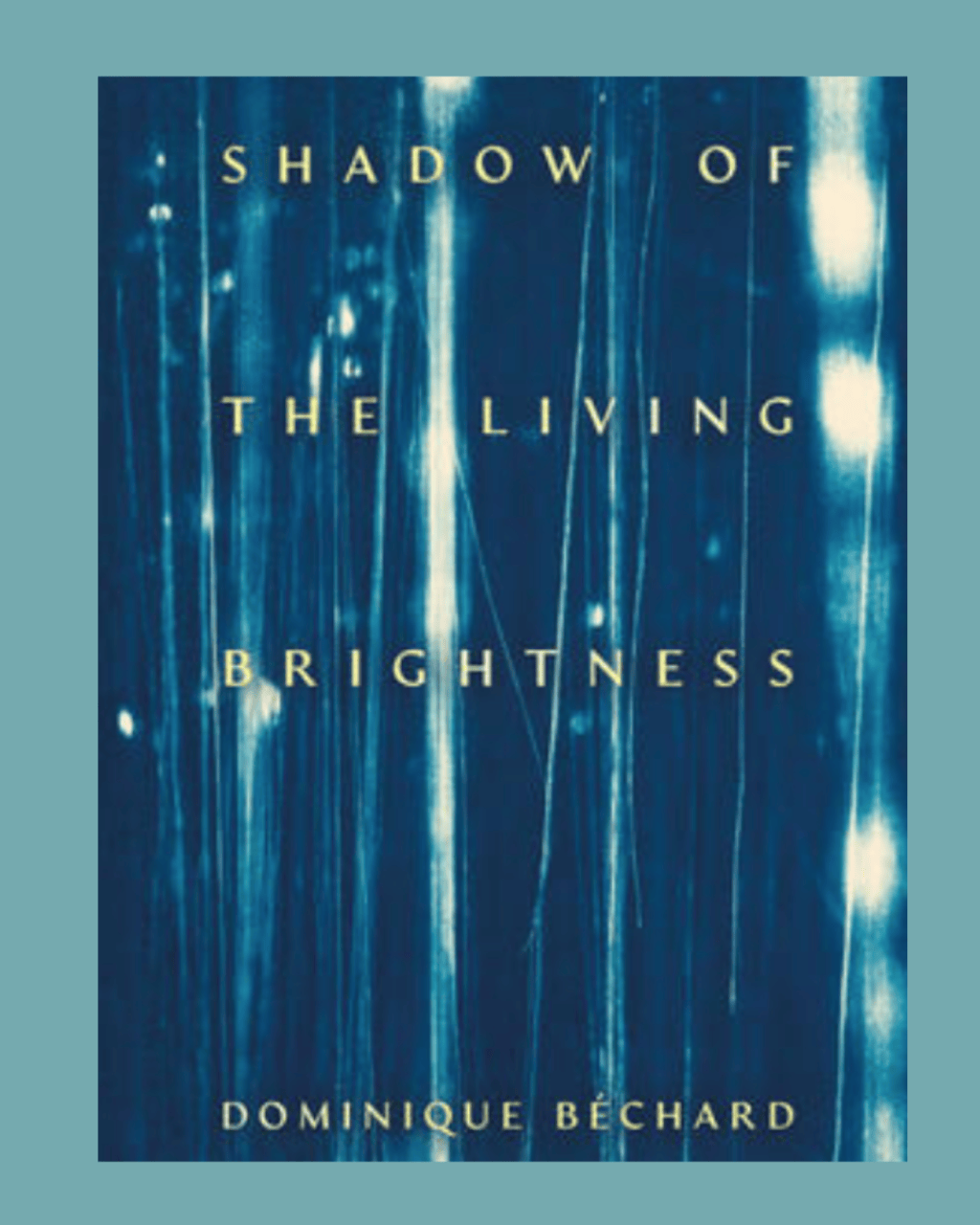
As regards book publication, I didn’t really know where to send a manuscript. I went to the library and looked at the 800s shelf, almost all of which dated back to the previous century. I looked at the spines to try to get the names of publishers. This didn’t work terrifically well. My efforts to identify “comps” for a cover letter were 100% unsuccessful. I sent my manuscript to a press that didn’t ask for comps. The main thing that is missing for writers and artists in the North is access to cultural resources—books, art, museums, and performance. I’d made a request for the public library to bring in Karen Solie’s multi-award-winning collection Wellwater; that was in October; it’s June and I’m still waiting. I’ve partly solved this problem by positioning myself as an extremely active poetry reviewer, to get books sent to my address.
I wish there were more residencies geared toward the needs of rural and remote writers. Most residencies seem to be designed to send urban poets to remote localities. I need the opposite. My dream residency is a few weeks on a large university campus with a library card, a pass to the nearest museum or gallery, and an introduction to the writing faculty. I can’t relocate for a year-long writer-in-residence position, and I don’t need to live in the big city any more than most poets who aren’t Al Purdy would want to be living year-round at the Al Purdy A-Frame house, but an occasional visit could be productive.
Whitehorse has an active arts scene, and I don’t want to give the impression that there’s nothing going on—I had quite a lot of fun with it back in the day, but I’ve not really been part of things since I quit drinking a few years ago. Small town scenes can be quite messy, full of your exes and their exes, old grudges and bad blood. The Whitehorse arts scene is also somewhat unusual in that it has tended to be populated with folks who’ve moved to the Yukon as adults, whose artistic response is shaped by that experience of arrival. This is a valid and interesting perspective, but it does tend to dominate, and not just because of sheer numbers. The artists I know who grew up in the North, as opposed to having chosen to come here later in life, have disproportionately high rates of disability, addictions, and serious mental health concerns—the kind involving hospitals and cops. We don’t always get along with everyone. We’ve been banned from various venues, or we’re avoiding them because there’s someone we really don’t want to run into. An event organizer here shared with me that quite a lot of our local folks have expressed apprehension about performing in public, not out of shyness or fear of public speaking, but due to needing to manage their exposure to some specific “person of concern” within the community. This is something I have never heard talked about in print, yet it seems to be a serious impediment for writers presenting their work within their own hometowns.
If I think about having access to a bigger “scene” in, say, Toronto, I’m of two minds. On the one hand, I’d love the chance to connect with poets who are working along different lines. Typically the Yukon hasn’t had a lot of Oulipian writers or dub poets or people producing concrete poetry, for example. Also, just being honest here, there’s the matter of applying on grants or residencies that ask for references, and the difficulty of collecting “well-known names” for these if you don’t get to meet anyone outside of your tiny town. On the other hand, from what I can see through the admittedly distorting lens of social media, it all looks rather alienating. I can’t see myself feeling super-comfortable at literary events, for a whole host of reasons, including that I really am from the sticks and I really do have values that don’t necessarily mesh with “the literary world”. There’s a nice moment in Geoffrey D. Morrison’s new science fiction novel from Coach House, The Coffin of Honey, where a character who’s a poet from a collectivist farm travels into the city for a literary conference, and when the meal is served she feels confused—how are the delegates supposed to get to know each other, if not by preparing food together in the kitchen? It’s just a casual bit in the narrative but so nicely highlights the ways in which the literary world is structured around unspoken norms that are not universally shared.
Many rural and remote poets operate within a poetics of place. Our poetry is situated in our particular landscapes and our (often troubled) communities. We are not part of the cosmopolitan, mobile class. We are not portable, not if we are going to make the work that matters most to us. Our art does not inherently benefit from travel, although we may benefit from access to libraries, museums, and peer connections that are available only in cities. We live where we live. Our art reflects those places and those lives, unglamorous as they might be.
I have read with great interest Chris Banks’ and Kim Fahner’s posts in this series about “the long-distance poet”, and I hear poets in places like the Maritimes and the Prairies and even the farther reaches of Ontario talk about feeling sidelined from Canadian poetry. Maybe the closer you get to that centre of gravity, the more you feel its pull. From my perspective out here on the periphery, though, I have to ask—do we even want to get sucked in?
Dawn Macdonald lives in Whitehorse, Yukon where she grew up without electricity or running water. Her poetry collection Northerny (University of Alberta Press) won the 2025 Canadian First Book Prize and was longlisted for the Nelson Ball Prize. Her latest publication is the chapbook Weeds of Canada (above/ground press).