
Chris Banks asked Selena Mercuri, Reviews Editor for The New Quarterly, a series of questions about the state of reviewing in Canada and the answers were fascinating. You are in for a treat!
- Tell us a little about yourself, and what has drawn you to take on the role of reviews editor with The New Quarterly.
I’m a writer, publishing professional, and MFA candidate at the University of Guelph. I began writing reviews in 2024. My first was for the Literary Review of Canada, on Strange Water by Sarah Moses (a fantastic book!). I had met publisher Kyle Wyatt while volunteering at the National Magazine Awards, and he later invited me to contribute. I also had the pleasure of having that first review edited by David Venn. The experience was eye-opening because, until then, I had not previously considered criticism as part of my writing practice.
After that, I continued contributing to the Literary Review of Canada but also branched out to other publications, such as The Ampersand Review, Room Magazine, The Seaboard Review, and Prairie Fire. As a writer of fiction, nonfiction, and poetry myself, I wanted my critical work to move just as fluidly between genres. What I came to love about reviewing was the opportunity to enter into a serious conversation with a book, to think carefully about what it is attempting, where it succeeds, and how it fits into a larger literary landscape.
My path to becoming reviews editor at The New Quarterly was somewhat unconventional because there was no job posting. I emailed Pamela Mulloy, TNQ editor-in-chief, and proposed creating a reviews section. She was generous enough to be receptive to the idea, and it has been a pleasure working with the TNQ team and helping build the section from the ground up.
More recently, I approached Havana Times editor-in-chief Circles Robinson with a similar proposal. Being half Cuban, I was interested in creating a bilingual space for critical discussion of Caribbean and Latin American literature, and thus the Havana Times books section was born. We publish reviews, interviews, seasonal lists, and author guest essays.
That tendency to create opportunities rather than wait for them has shaped much of my publishing career. I’m actually terrible at conventional job interviews, which is something I’m trying to improve! Many of the roles I’ve held have come about through less conventional means, often by meeting people at literary events, sending an email with an idea, or simply asking whether there might be a way to contribute. That was true of my work as a book publicist with River Street, founded by talented writer and publishing professional Hollay Ghadery, and even of the literary-agency internships I pursued during my undergraduate degree at the University of Toronto, which began with cold calls and unsolicited emails.
There is inevitably something awkward about putting yourself forward that way, but I’ve learned that the worst outcome is usually a no or silence. The best outcome can be the creation of something that didn’t exist before.
That is ultimately what drew me to the reviews editor roles at The New Quarterly and Havana Times. I think we need more spaces where books can be discussed seriously, generously, and at length, particular as literary coverage continues to contract. The closure of publications like Open Book and the Hamilton Review of Books have made this need feel especially urgent. Reviews are part of the ecosystem that introduces readers to writers, gives critics room to develop their thinking, and creates an ongoing record of a literary culture. That is one of the reasons I admire what you’ve built with The Woodlot. Creating and sustaining spaces for literary conversations takes an enormous amount of work, but those spaces matter.
- I have my own ideas about what constitutes a good review, but I was wondering what do you look for in a poetry review?
What a good review comes down to for me, first and foremost, is balance. I mean that in several ways. There is balance within the review itself—including enough quotations to give readers a sense of the range and texture of a collection without allowing excerpts to do the reviewer’s work; negotiating the divide between description and critical analysis; and giving appropriate attention to craft, content, and the larger context of the poet’s work.
There is also a broader form of balance involved. I approach reviewing partly as a responsibility to convey as clearly as possible what a reader can expect from a book. A review should offer enough information and analysis that a reader can make an informed decision about whether they want to spend several hours of their life with that collection. I want a reviewer to take the book seriously on its own terms, while still being willing to say where they think it succeeds and where it doesn’t in the context of what the author was trying to do.
With poetry in particular, I’m interested in reviews that engage with how the poems actually work. It can be easy to spend most of a review discussing subject matter (what the collection is “about”) when so much of what distinguishes poetry happens at the level of sound, syntax, image, lineation, form, repetition, rhythm, and the relationship between individual poems. I like a review that gives me some sense of the architecture of the collection as a whole. Why are these poems together? What builds or changes as the book progresses? What is the poet doing formally? How does the form mirror, elevate, and/or inform the content? Ideally, quotations allow the reader to hear some of this for themselves.
I recently had the pleasure of interviewing Sina Queyras, one of my favourite writers, for The New Quarterly. It was wonderful to discuss both their poetry and their critical work as a reviewer and as the founder of Lemon Hound, which published reviews, interviews, excerpts, and literary commentary. Sina’s criticism strikes many of the balances I’m talking about. Their reviews are intellectually serious but also very clear about what, for them, worked and didn’t work in a book. They have personality. It’s rare that reading a book review makes me laugh, but Sina’s criticism has done that.
That connects to something I still go back and forth on in my own reviewing: how much of the reviewer should appear in the review. I don’t necessarily want criticism to become memoir, and I think the book ultimately has to remain at the centre of the piece. At the same time, I enjoy criticism that acknowledges that a review is being written by a particular person with particular experiences, tastes, and points of reference.
Ultimately, I think the best poetry reviews make me feel that I understand the collection more deeply without feeling that the reviewer has explained it away. They leave some mystery intact and still make me curious enough to want to encounter the poems for myself.
- What advice would you give a Canadian poet who wants to start reviewing?
I don’t necessarily think you need to be a poet to review poetry, so my advice here would apply to anyone interested in reviewing. I’d start by reading reviews across a range of publications. That will give you a sense of the different approaches critics take, but it will also help you identify magazines or websites you might want to write for.
One thing I struggled with at first was that review submissions work very differently from poetry, fiction, or nonfiction submissions. Most publications have clear submission guidelines for those genres, but they don’t always explain how to become a reviewer. In those cases, I would simply email the reviews editor (or the magazine more generally) with a short introduction, the kinds of books I was interested in covering, a few recent titles I might like to review, and one or two writing samples. If you’re just starting out and don’t have published samples, I think it’s perfectly fine to say that. You can also write a review independently and post it on a blog or social media so editors can get a sense of your critical voice.
As a new reviewer, you’ll also have to make a lot of decisions about what kind of critic you want to be, including how critical you’re comfortable being, how much you want to contextualize a book through the author’s previous work, whether you want to bring your own experiences into the review, and so on. There isn’t one correct approach, as long as you’re working within the expectations of the publication. Some magazines, for example, explicitly prefer not to publish strongly negative reviews and would rather devote that space to a book the reviewer finds more worthwhile.
Lastly, I’d suggest resisting the idea that a review exists simply to pronounce a book “good” or “bad.” I find it much more useful to ask questions. What is this writer trying to do? How are they trying to do it? Where does the book fulfil those ambitions, and where does it fall short? A good review should offer judgement, certainly, but it should also offer curiosity, context, and enough generosity to take the work seriously on its own terms.
- In terms of selecting which Canadian poetry collections are reviewed by TNQ, what criteria are you looking for? Or is it more of a gut-level “connection” between the reviewer and the book under review?
My answer here also comes down to balance. We currently publish one review a month, so each selection especially matters. Across the year, we try to make sure we’re giving attention to a range of genres, publishers, regions, career states, and marginalized voices rather than repeatedly drawing from the same corners of Canadian literature.
We select the titles collaboratively as a team at TNQ. Once we’re decided on the next group of books, I try to match each one with a reviewer who seems particularly well suited to it, based on the interests and/or genres they’ve indicated to me. I’ve also solicited reviews from critics whose work I admire, as well as from people who are interested in reviewing for the first time. I’m always happy to work with new reviewers. Part of what excites me about editing reviews is creating opportunities for emerging critics to develop their voices.
Of course, with only twelve reviews a year, there will always be far more worthwhile books than we can cover. The goal is to make those twelve choices as thoughtful, varied, and interesting as possible. We recently also started publishing seasonal book lists and interviews, so those are other avenues we have to highlight books and writers we may not otherwise have room to feature through a full review.
- Does a review always have to be overwhelmingly positive? Or to put it another way, is there a place for evaluative criticism anymore given that reviewing spaces are diminishing, and people willing to review are few and far between? (I know this is a hard question, and I struggle with it myself.)
I think the tension you’re describing is real, especially when reviewing space is so limited. If a publication only has room for a handful of reviews each year, I understand the impulse to use that space to draw attention to books that deserve more readers rather than devote 1,000 words to something the reviewer disliked.
At the same time, I don’t think criticism is very useful if every review becomes an endorsement. A reviewer should be able to say that something didn’t work for them, or that a book’s ambitions weren’t fully realized in their opinion. Otherwise, we risk collapsing criticism into publicity, which serves neither readers nor writers particularly well.
For me, the distinction is between being critical and being dismissive. I’m much more interested in a review that asks what a book is trying to accomplish, takes those ambitions seriously, and then evaluates how successfully it achieves them. That can absolutely involve disagreement, disappointment, or pointing to weakness. What matters is that the criticism is fair, specific, and grounded in the work itself rather than in a desire to be clever at the author’s expense.
There’s also something to be said for proportion. A book can have serious flaws and still contain extraordinary moments, and a reviewer can admire a collection while questioning some of its choices. In fact, I often find those reviews more interesting than ones that are uniformly positive or negative because they reflect the complicated experience of actually reading.
So yes, I do think there is still a place for evaluative criticism, but given how few reviewing spaces remain, I think editors and reviewers have to be thoughtful about what deserves that space and what sort of critical conversation they want to contribute to.
- I have always said people who work in small press and small literary magazines are super-heroes, as it is the “people level” that keeps the whole Canadian poetry ecosystem afloat. What are some of the struggles and the triumphs of working in small press and literary magazines for you personally?
One of the biggest struggles, as I’m sure you know, is that there are always more books deserving attention than we have space to cover. We publish a limited number of reviews, and every season there are so many exciting books coming out that I wish we could feature. Making those choices can be difficult, especially knowing how meaningful even one thoughtful review can be for a writer or press.
There are also the practical realities of literary magazine work, such as limited budgets, limited staff time, and people often taking on several roles at once. So much of the literary ecosystem depends on people doing an enormous amount of work because they genuinely care about books and writers. That can be exhausting, but it’s also part of what makes the community feel so personal.
For me, the triumphs outweigh those frustrations. I love being able to introduce readers to a book they might otherwise never encounter, to give a new reviewer their first opportunity, or to connect a writer with a critic who really understands what they’re trying to do.
So I think your description of it as the “people level” is exactly right. Canadian literature depends on people deciding that a book, a poem, a review, or a conversation is worth making space for. I feel very fortunate to be one of the people who gets to help make some space.
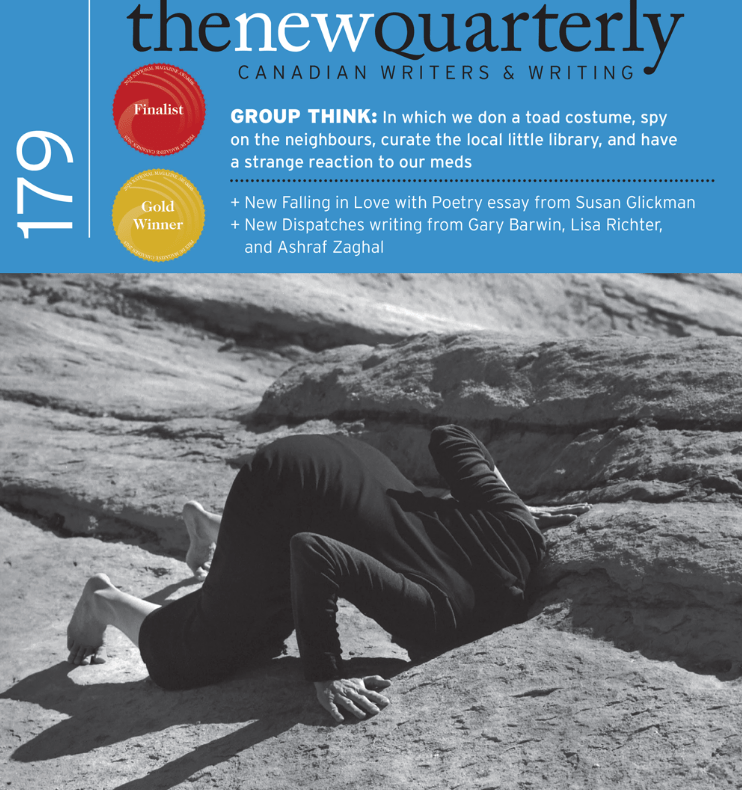
Selena Mercuri is Reviews Editor at The New Quarterly and Havana Times, and a book publicist at River Street. She is represented by Kelvin Kong at K2 Literary. Find her on Instagram at @selenamercuriwriter.