reviewed by Chris Banks
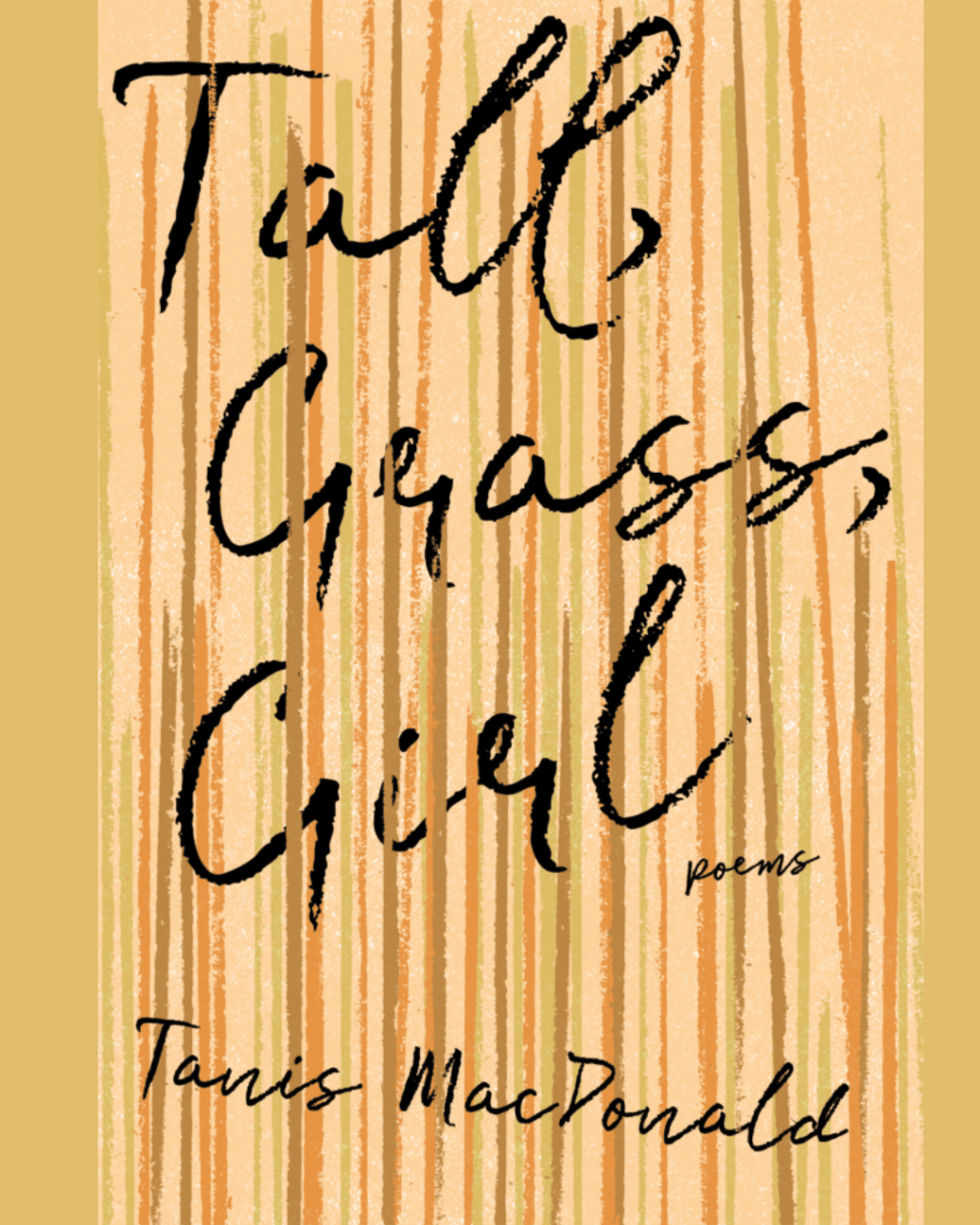
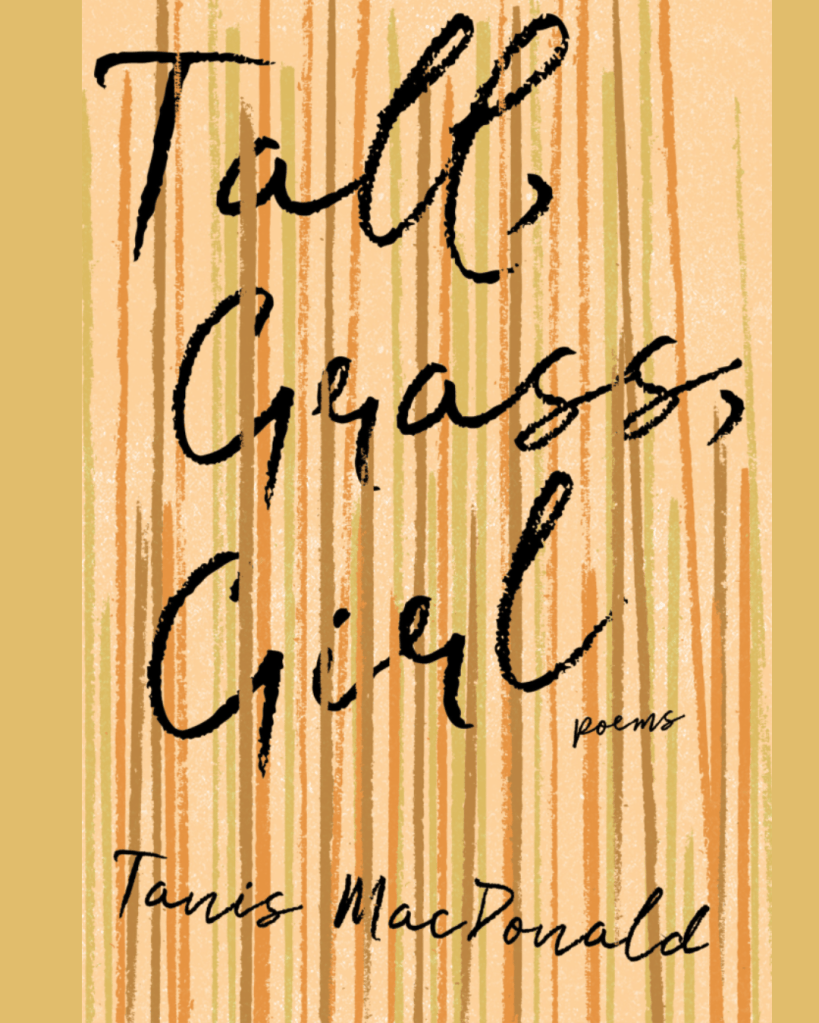
I was challenged by Tanis Macdonald’s Tall, Grass, Girl out this fall with Book*hug press which is a profound lyric meditation on adoption, assault, ptsd, and, above all else, thriving despite life’s challenges and hardships. Macdonald leans hard into word-play, “world-play”, myth-building, genealogy, and her own experiences which culminate in a book full of poetic forms and half-confessions; traumas and travails; literary allusions to other writers like Raymond Carver and Erin Moure, but also multiple references to animals like crows, coyotes, starfish.
The poet Macdonald says in one poem “A History”: “I confess to / refusing to make this easy.”
Where to start? There are seven sections spread over 149 pages, and some poems are quite short and economical, others are sonnet suites or long poems spread over multiple pages, some are mere “snatches” of a childhood memory fogged by distance, others almost prose diary entries, and others sharp and pointed like a bird’s beak pecking at a wound. The wound being childhood? Girlhood? Harmful men?
There are tercets and quatrains and a myriad of other poetic structures threaded through the pages where the poet Macdonald tries to make sense of the past by interrogating one’s identity, or maybe “identities”: grassy girl, booksmart/whipsmart student, respected professor. It’s almost as if Macdonald is an incidental tourist to her own life, stepping back from it in these pages, in order to try make sense of the pain and passage of time.
There are poems about attempting to discover one’s genealogy, looking for an Aunt You, poems about city Gorgons, and foster families and dating profiles. Love is a vaccine bruise, planets are lined up in the sky like “the eyes on a peacock’s fan of feathers”, where all our “entanglements” are quantum, where our best life lived is merely, maybe, a half-life? Oof! It was hard to choose what poem to excerpt from this challenging collection, but I’ve chosen the poem “Shelter” towards the end of the book:
SHELTER
If we could undiscipline ourselves
and unbuckle the borders between
you and me, we’d
glow. At last there are no
tyrants between us and we can
speak together as bodies
sideswiped by time, lost and found
by the fire in our heads,
sweetened by
our diagnoses. I believe you
when you tell me you did not take
a direct route to a calm
mind; I live on that bend
in the river, I built a warming hut
there. The dark age is coming on
centipede feet and I have a government
grant to loiter with intent but
my hip lights up like an ember
in a turnip. I don’t read
the ancient language, though
it reads me. Listen to this rain;
it sings of how we shelter
each other, fierce and dripping,
lighting ourselves warm.
This poem speaks to me certainly, especially the idea of being “sideswiped by time”, and maybe that’s why Macdonald doesn’t look at her PTSD head-on, but keeps it steady in her peripheral vision in these pages. It’s hard to undiscipline oneself from the rational, from the old stories we have told ourselves about ourselves for decades, to unlearn who we are, to “unbuckle the borders between / you and me” as the poem says.
In Tall, Grass, Girl out this Fall with Book*hug press, the poet Tanis Macdonald allows her imagination to stitch, to piece together the different “cloth” of her life, both the difficult and the praiseworthy, and made this compelling compendium of poems about survival, female identity, love and lyricism and especially resistance to easy answers for why we are who we are.
Chris Banks is an award-winning, Pushcart-nominated Canadian poet and author of eight collections of poems, with Bureau of Useless Splendour forthcoming (Fall 2026, ECW press). His first full-length collection, Bonfires, was awarded the Jack Chalmers Award for poetry by the Canadian Authors’ Association in 2004. Bonfires was also a finalist for the Gerald Lampert Award for best first book of poetry in Canada. His poetry has appeared in The New Quarterly, Arc Magazine, The Antigonish Review, Event, The Malahat Review, The Walrus, American Poetry Journal, The Glacier, Best American Poetry (blog), Prism International, among other publications. Chris was an associate editor with The New Quarterly, and is Editor in Chief of The Woodlot – A Canadian Poetry Reviews & Essays website. He lives with dual disorders–chronic major depression and generalized anxiety disorder– and writes in Kitchener, Ontario.