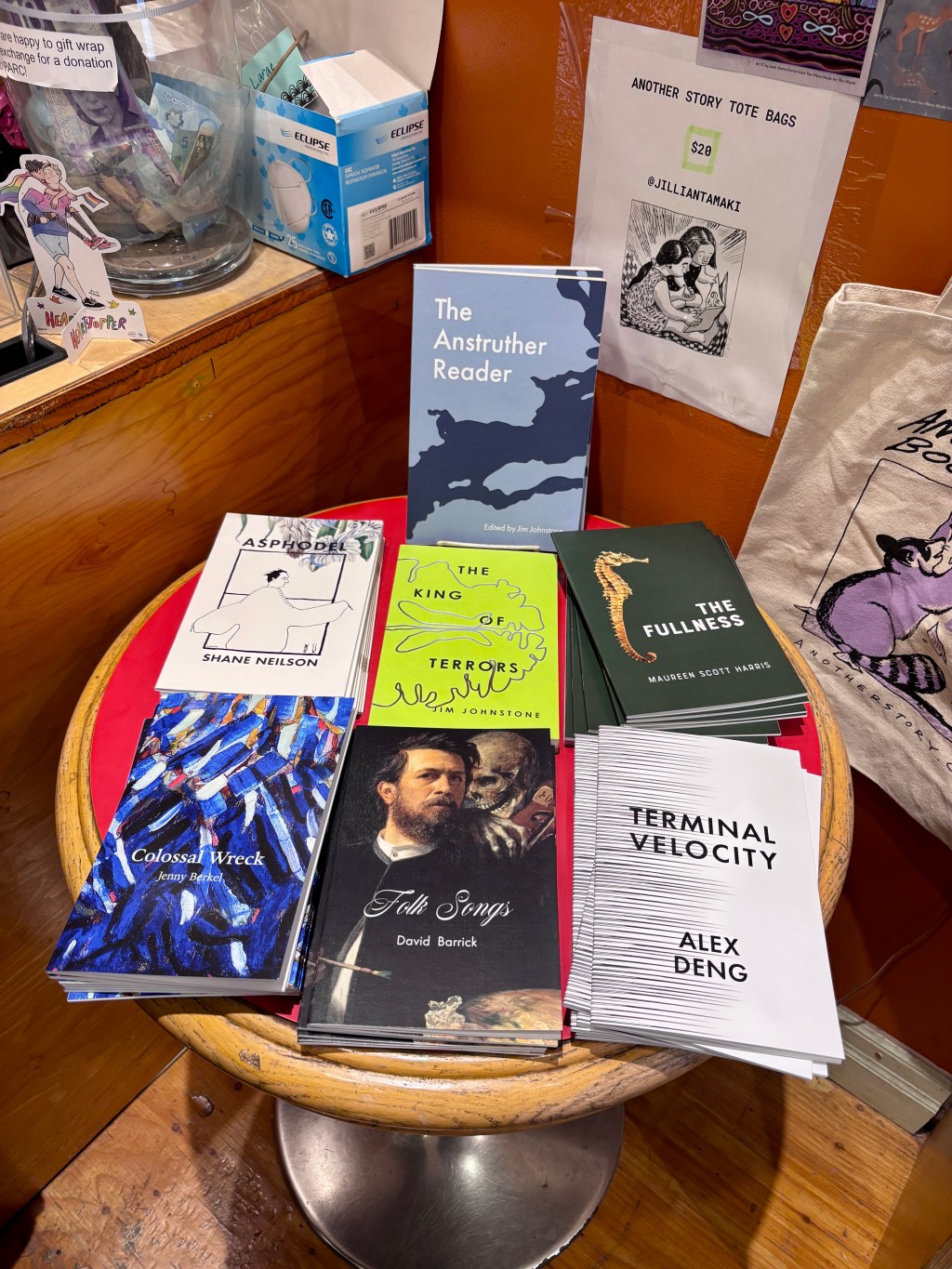
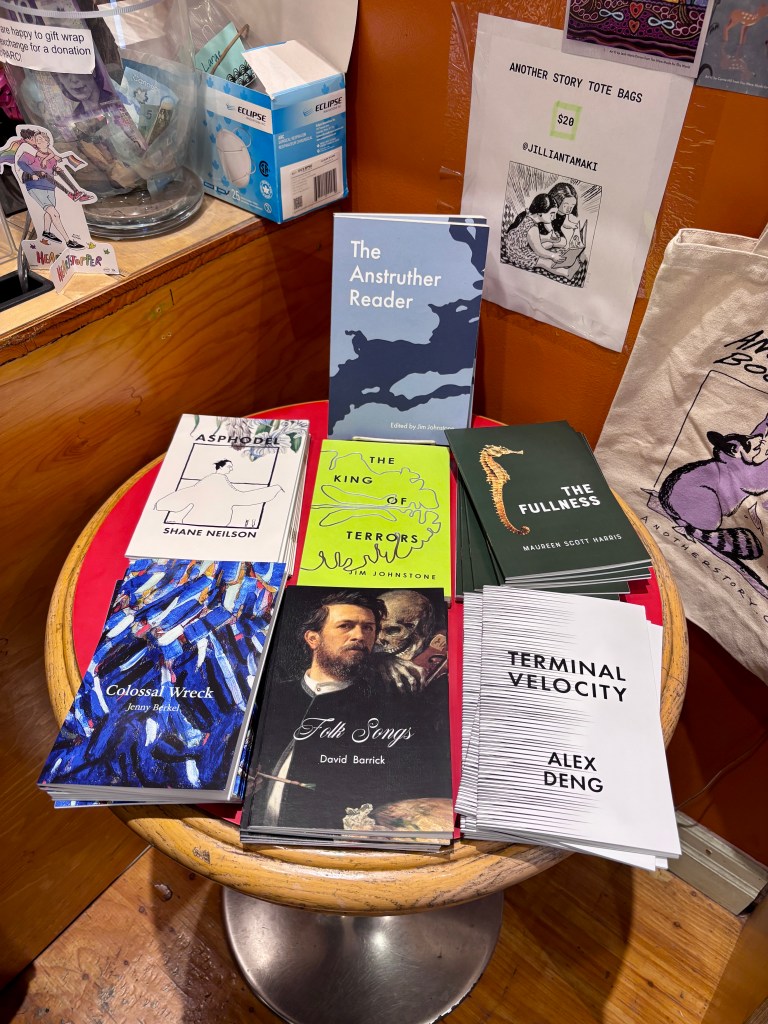
A few weeks ago, I managed to get up to Toronto to see the Summer launch of five brand new chapbooks from the mighty Anstruther Press. Jim Johnstone, editor and publisher, was gracious enough to answer a few questions about Anstruther press, and his dedication to chapbooks as a medium for Canadian poetry.
CB: Let’s get into it. Why publish poetry chapbooks? Has the answer changed since you founded Anstruther Press in 2014?
JJ: For me, chapbooks are the ideal unit of poetry. That’s been my guiding principle as a publisher, and informs the why of Anstruther. A lot has changed since 2014, including how our books are designed, edited, and produced, but the spirit of the enterprise, particularly our interest in being an independent, self-funded publisher, remains the same.
CB: Here at the Woodlot, we don’t review poetry chapbooks because we simply do not have the time or manpower to do that, but I do believe chapbooks to be an important part of the Canadian poetry landscape. The short story writer Norman Levine said, “we all begin in a little magazine”, but increasingly, it feels like younger Canadian poets start their publishing journey in a beautifully designed, tightly edited, small chapbook. How important is it for you, personally, to work with emerging poets?
JJ: Very. Debut chapbooks are a key part of Anstruther’s publishing mandate. Many of our first time authors have become widely recognized, and I’m very proud to have been part of the journey for authors like Klara du Plessis, Tolu Oloruntoba, Amanda Merpaw, Marc Perez, David Ly, Melissa Powless Day, and Terese Mason Pierre, to name a small handful. Still, I don’t see micropress as a realm solely devoted to beginners, but as rich publishing space for all poets.
CB: Further to my last question, I see that Anstruther Press has an editorial collective. How helpful has that been for you to find new voices in Canadian poetry? And when do you decide a young Canadian poet is ready to take their work to the level of a chapbook debut?
JJ: I’m grateful to have an editorial collective that adds multiple voices and opinions to my own. Anstruther’s editors are spread across the country by design, with an eye towards finding and soliciting material from local poets that are producing promising work. When we do find poets we want to publish, they’re always at varying stages of readiness—I tend to favour enthusiasm over markers of craft when selecting debut poets, and consider us a teaching press for this reason.
CB: I just want to say how much I admire Anstruther’s commitment to the design and layout of the poetry chapbooks you publish. And then there are the broadsides too! Everything feels so carefully cultivated and aesthetically beautiful. What are the stages a poet’s work goes through once you accept a chapbook for publication?
JJ: Thanks Chris. Anstruther’s layout and design is all my wife Erica Smith’s doing, and I couldn’t run the press without her generosity and skill. In terms of process, when the editorial board decides to accept a book for publication, we put the poems through a fairly rigorous editorial process before we move on to design. I like to have the work nailed own before we start the branding process.
CB: This summer you are launching FIVE new poetry chapbooks. Can you quickly walk us through those titles, and what we can expect from these poets?
JJ: I think the five chapbooks we’re launching in August fit together well. You have established, well-known poets like Shane Neilson and Maureen Scott Harris offering some of their most accomplished work alongside David Barrick, who will be publishing his second full-length book in 2028, and Jenny Berkel and Alex Deng, who are both at the beginning of promising careers. I can’t recommend this group highly enough.
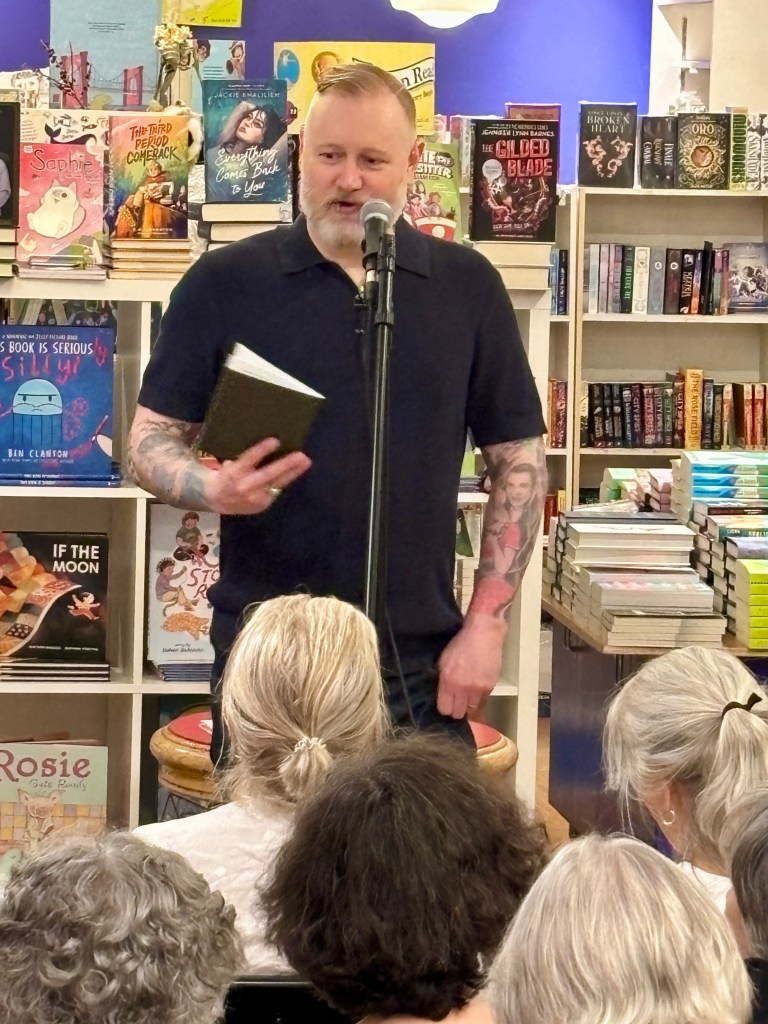
(photo: Jim Johnstone of Anstruther Press)